
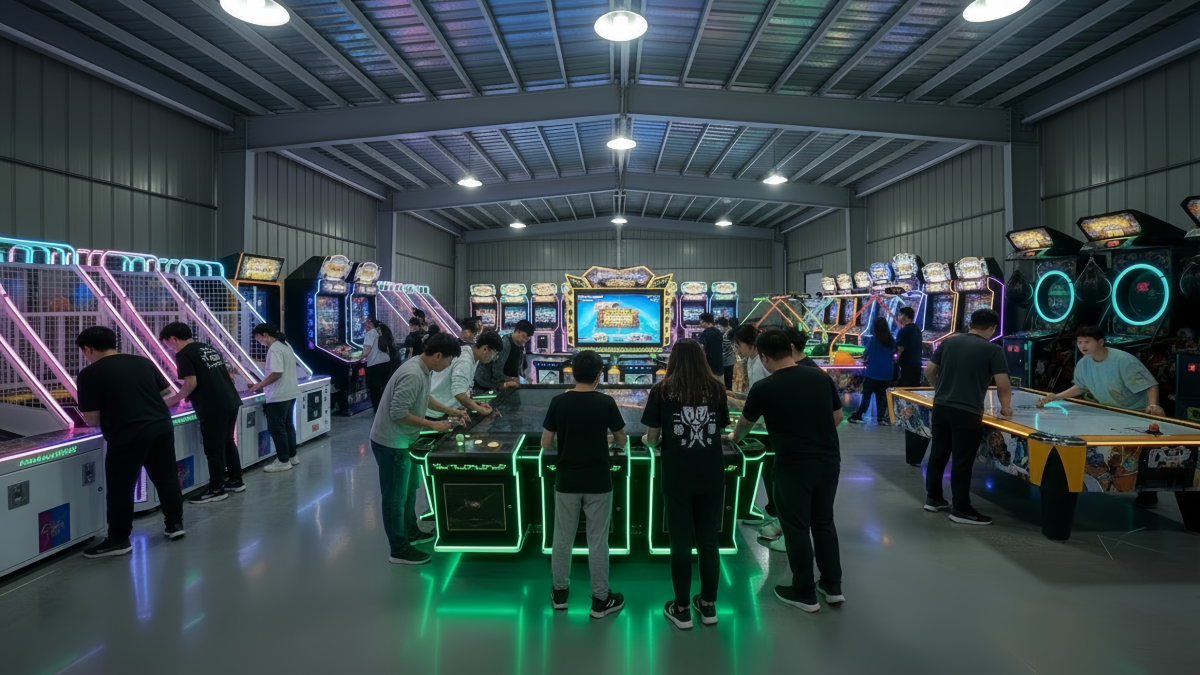
In 2026, buyers are looking at commercial arcade machines differently. A new cabinet may attract attention, but game room operators also want to know whether the machine fits the floor, suits their customers, and can still be serviced after months of daily use.
That makes machine mix, floor space, spare parts, payment options, testing and supplier support just as important as appearance. For commercial buyers, the best machine is not always the newest one. It is the one that fits the venue and remains practical to operate.
Buy Each Machine for a Clear Role
A game room does not need a floor full of machines that create the same experience. Different machines should give different customers a reason to stop, play or compete.
| Role | Typical Machine | What to Check |
|---|---|---|
| Quick Competition | Basketball / Boxing | Visibility, space and controls |
| Group Play | Multi-player fish games | Player count and service access |
| Family / Social Play | Air hockey / Kids games | Target users and floor layout |
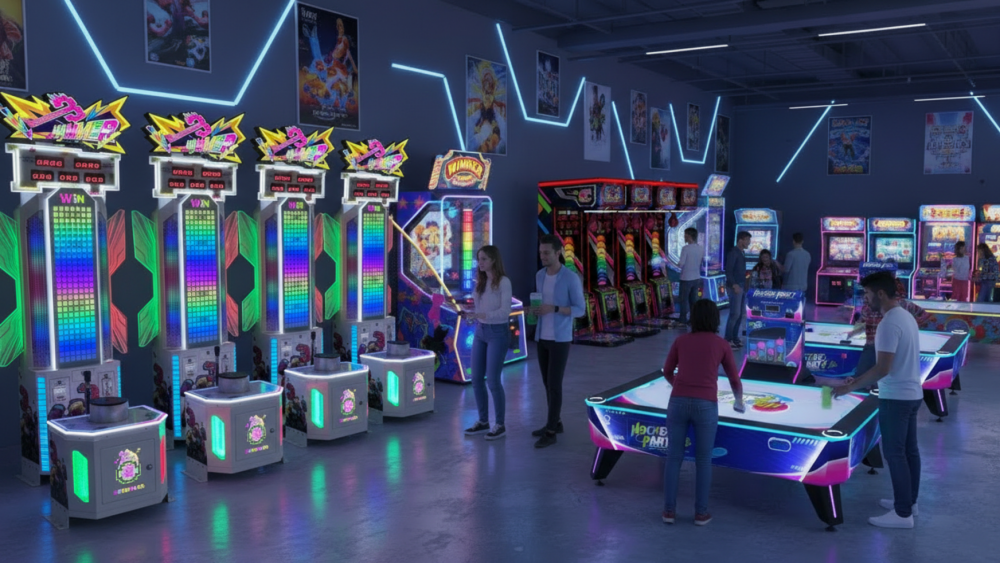
For example, a commercial basketball arcade machine can provide simple competitive play that customers understand immediately. A multi-player or family machine serves a different purpose. The right mix depends on the venue rather than one universal list of “best arcade machines.”
Floor Space Is Part of the Machine Cost
A large machine may look impressive in a catalog, but every cabinet uses operating space. Buyers need to consider machine dimensions, player movement, cleaning access, maintenance space and the route from the entrance to the final installation position.
This matters especially in family entertainment centers and smaller game rooms. Adding one oversized cabinet can affect the layout around several other machines.
IAAPA’s arcade operations guidance also emphasizes machine placement, maintenance and reinvestment as part of arcade operation rather than treating equipment as a one-time purchase. You can review the IAAPA arcade operations guidance for the wider operator perspective.
Buyers Are Looking More Closely at Maintenance
Commercial machines work long hours. Buttons and joysticks wear, power supplies can fail, wiring needs inspection, and boards may eventually need replacement.
That makes serviceability part of the buying decision. Can the control panel be opened easily? Are the internal parts accessible? Can common components be replaced without major rewiring? Can the supplier provide the same PCB or spare part later?

A Commercial Air Hockey Table, for example, looks simple from the player side, but an operator still needs to consider the payment system, blower system, cabinet construction and future parts support.
What Are Commercial Buyers Checking?
- Machine dimensions and required floor space.
- Target players and the role of the machine.
- Cabinet, screen, controls and payment configuration.
- Access to boards, wiring and service parts.
- Availability of replacement parts and technical support.
- Pre-shipment testing and export packaging.
For distributors, consistency matters as well. A machine that can be reordered with the same board, wiring and replacement parts is usually easier to sell and support than a model that changes internally from one shipment to the next.
Industry Insight: More Machines Are Not Always Better
For a commercial game room, adding another cabinet only makes sense if it serves a clear purpose. A machine may attract attention, support group play, serve families or create quick competition. If it simply duplicates another machine while using valuable floor space, the purchase becomes harder to justify.
The same applies to maintenance. A smaller group of machines with familiar controls, repeatable wiring and available spare parts can be easier to operate than a larger collection of unrelated models that all require different support.
Final Thoughts
In 2026, commercial arcade buyers are looking beyond appearance. Floor space, customer mix, maintenance, replacement parts and supplier support continue to matter long after installation.
For Fusen commercial arcade projects, buyers can discuss machine configuration, OEM options, payment systems, spare parts, pre-shipment testing and packaging before ordering. The best arcade machine is the one that fits the venue and can still be supported after it enters daily operation.
Need Factory Direct Fish Game Solutions?
Contact FUSEN for fish game machines, PCB kits, cabinets, OEM/ODM customization, and long-term technical support.
Get Factory Quote