
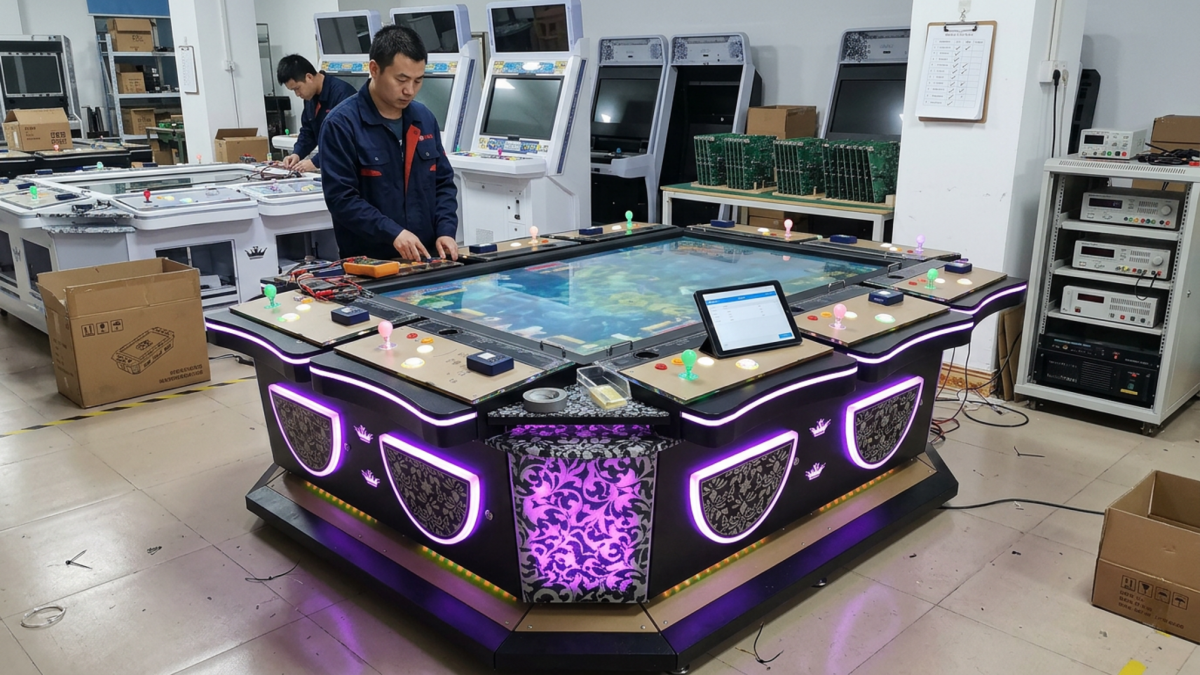
For an operator or distributor, choosing cashless payment for a fishing arcade machine is not just a checkout decision. It changes the control panel, wiring, power supply, I/O signal, credit settings, testing, and later troubleshooting.
Cashless can be the right choice when a venue already uses a stable card, wristband, or mobile-payment platform. It becomes a costly mistake when the factory simply leaves a hole for the reader and calls the machine “cashless-ready.”
Quick answer: Before production, confirm the exact payment device, signal, voltage, mounting size, credit ratio, wiring, software settings, and support records.
Why Is Cashless Payment Changing the Machine?
Modern venue systems can connect stored-value cards, wristbands, smartphones, point-of-sale functions, and centralized management. For operators, this can simplify recharging, promotions, reporting, and control across several attractions.
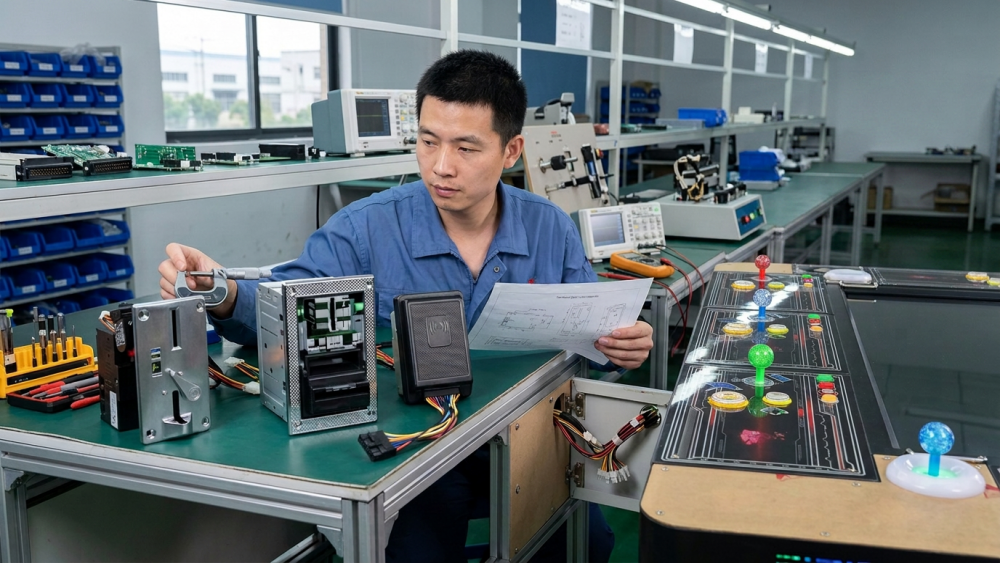
For the manufacturer, however, the reader must work as part of the cabinet. The machine has to receive the correct signal, convert it into the agreed credits, and assign those credits to the correct player position. The panel opening, power input, harness, I/O board, and software settings all need to match.
That is why “card reader supported” is too vague for a purchase order. The reader model or technical sheet should be confirmed before the panel and harness are finalized. Current IAAPA cashless-system listings show how payment is increasingly connected with cards, wristbands, smartphones, and centralized venue management.
A complete machine specification should also state which payment configuration is being supplied. Fusen’s 8-player commercial fish table, for example, lists Key In/Out, bill acceptor, and coin-operated options. The final choice should be recorded with the wiring and software settings used for the actual order.
Coin, Bill, or Cashless: Which Setup Fits the Venue?
No payment method is automatically best. A smaller arcade may prefer coins because a standard acceptor is easy to replace. A busy family entertainment center may already use one stored-value platform across games, food, lockers, and attractions. Distributors may need a cabinet that can be adapted for several customers.
| Payment Option | Often Suitable For | Main Risk to Check |
|---|---|---|
| Coin acceptor | Smaller venues and traditional arcades | Local coin recognition, jams, and pulse settings |
| Bill validator | Venues that accept local banknotes | Currency version, note direction, and voltage |
| Card or wristband reader | FECs with an existing venue platform | Signal, mounting, power, and credit logic |
| Hybrid setup | Distributors serving different venue types | More wiring, settings, and support work |
Country differences should be treated as technical requirements, not assumptions about customer habits. Confirm the local payment provider, electrical conditions, currency device, operating language, available technicians, and replacement-part access.
Where Do Buyers Usually Get Caught Out?
The most common problem is a reader that powers on but adds the wrong credits. Physical fit proves only that the opening is correct; it does not prove that the signal and software match.
Another problem appears when the factory tests with a generic reader. The demonstration may work, while the buyer’s device uses a different voltage, pulse length, connector, or output method.
Batch consistency matters too. If identical cabinets leave the factory with different harnesses or I/O settings, the distributor cannot support them in the same way.
A basic quotation says “coin/card available.” A stronger quotation identifies the device, interface, wiring, software version, and test method. That difference is often cheaper than reopening panels after delivery.
Typical Project Scenario: The Reader Works, but the Credits Are Wrong
Consider a distributor preparing several multiplayer machines for a venue with an existing stored-value system. The reader dimensions are supplied, so the factory makes the opening and installs the unit. During final testing, one transaction adds five credits instead of the agreed ten.
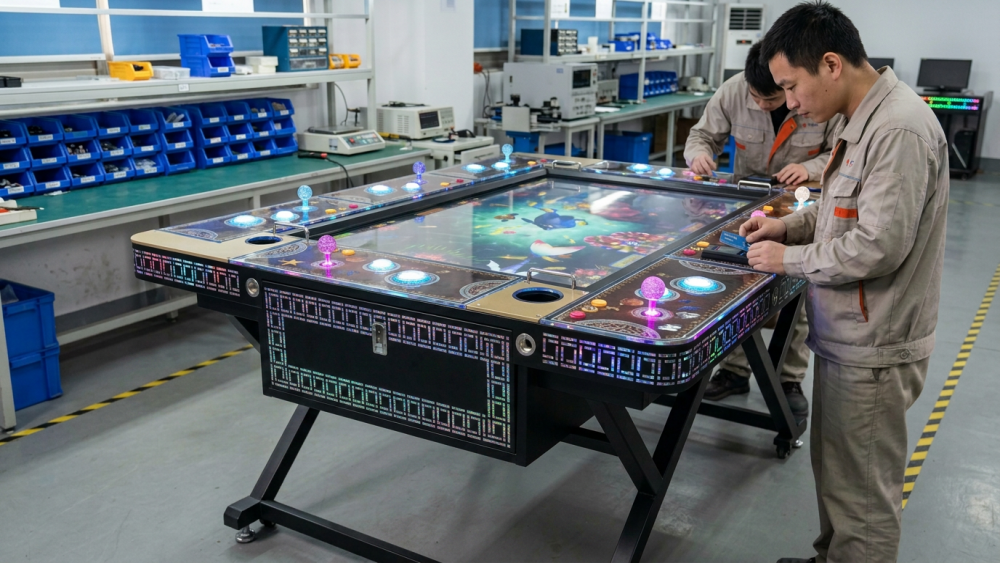
The factory should check the reader output, I/O setting, player mapping, and software credit ratio, then repeat the test on every player position. The final video should show the payment action and the credit change on screen.
This problem is inexpensive to correct before packing and frustrating to correct after import. The cabinet may be complete, but the machine is not ready until the payment logic is verified.
The practical difference: One supplier provides an opening for the reader. Another verifies that the actual payment device works with the machine.
What Should Testing and After-Sales Support Include?
A proper pre-shipment video should show the actual order, not a showroom sample. It should cover repeated payment inputs, credit changes, every player station, game start, language, difficulty, and restart behavior. Internal photos should record the reader, connector, harness route, I/O board, power supply, and software version.
After delivery, those records make remote diagnosis faster. When payment fails, the buyer can send a short operation video, screen-credit change, device label, connector photos, I/O board photos, and software settings. The supplier can then separate a reader fault from a power, harness, I/O, or software issue.
The I/O board is especially important because it sits between player controls, payment signals, and the game system. Fusen’s fish game I/O control board is designed for signal transmission and fish game machine control. When a payment fault occurs, the board model, connector position, harness, and software setting should be checked against the original shipment record.
Industry Insight: Cashless Integration Is Part of Product Quality
Cashless payment is often presented as a venue-management upgrade. From a manufacturing perspective, it is also a quality-control issue. The reader, power source, harness, I/O board, software setting, and service record form one system.
A low-cost supplier may provide the opening and leave the integration work to the buyer. A reliable manufacturing process proves that the actual device works with the actual machine.
A payment device is not an accessory added after production. It is part of the machine’s electrical, wiring, software, and support system.
Conclusion
Cashless payment can make a fishing arcade machine easier to manage, but only when it matches the venue’s system and maintenance capability.
Before ordering, ask for more than “card reader supported.” Confirm the device, signal, voltage, mounting, credit logic, test procedure, and support records.
Need Factory Direct Fish Game Solutions?
Contact FUSEN for fish game machines, PCB kits, cabinets, OEM/ODM customization, and long-term technical support.
Get Factory Quote