
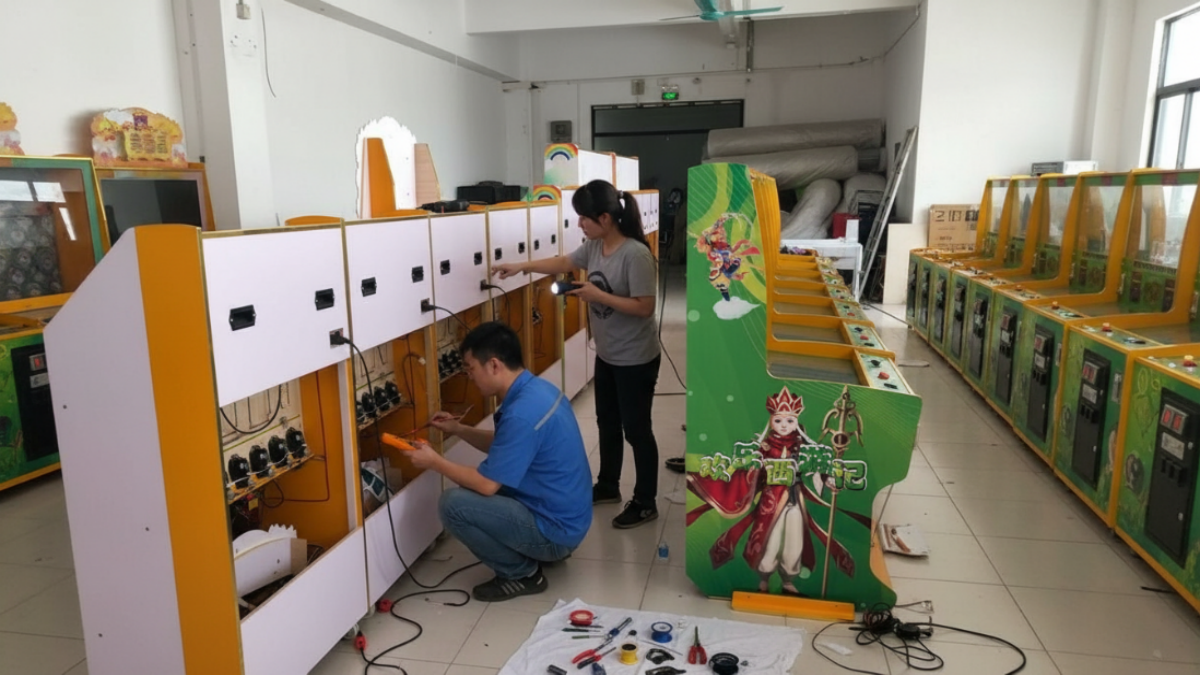
For arcade operators, downtime is not just a repair issue. A machine that cannot start, accept payment, display correctly, or respond to players is a machine that is not earning.
In many game rooms, the problem starts with small parts: a worn button, loose joystick, unstable power supply, faulty coin acceptor, mismatched I/O board, or PCB issue. The repair may be simple, but the delay often comes from not having the right spare part or not knowing which part failed.
That is why spare parts supply and after-sales support should be checked before buying commercial arcade machines, not only after the machine has already stopped working.
Quick Answer: What Causes Arcade Machine Downtime?
Common causes include button failure, joystick problems, weak power supply, loose wiring, bad display signal, coin acceptor error, card reader issue, I/O board mismatch, PCB fault, or software setting problems.
| Downtime issue | What buyers should prepare |
| No display or unstable screen | Video cable check, monitor support, power supply, PCB signal support. |
| Buttons or joystick fail | Spare buttons, microswitches, joystick parts, wiring photos. |
| Payment does not work | Coin acceptor, card reader, pulse setting, I/O matching. |
| One player position stops | Player harness, button wiring, joystick signal, I/O connector. |
Downtime Is Part of Operating Cost
Venue owners usually compare machine price carefully, but downtime is often ignored during purchasing. In real operation, one offline machine can affect floor revenue, player experience, and staff time.
IAAPA notes that arcade maintenance is important because games need to stay online and generate revenue. The same article also gives operators a practical revenue reference of at least $200 per game per week. You can read IAAPA’s article on building an arcade operation.
The point is simple: commercial arcade machines are operating assets. Buying the machine is only the first step. Keeping it running is what protects long-term income.
Prepare the Parts That Fail Most Often
Not every operator needs a large spare parts room. But every serious venue should keep the parts that fail most often or can be replaced quickly on site.
Useful spare parts usually include buttons, joysticks, microswitches, wiring harnesses, power supplies, I/O boards, coin acceptors, card reader parts, locks, speakers, cooling fans, and common PCB boards. These parts are small compared with the value of keeping a machine open for players.

For fish game machines, spare parts matter even more because the cabinet may include multiple player positions, control parts, wiring harnesses, payment parts, I/O boards, and PCB systems. A product such as the Black Panther Fishing Game Machine is a useful example of why operators should think about machine operation and future maintenance together.
Technical Support Prevents Wrong Purchases
A black screen does not always mean the PCB is broken. It may come from the monitor, video cable, power supply, or software setting. A payment problem may come from the coin acceptor, card reader, I/O board, wiring, or signal configuration.
Good technical support helps buyers identify the real fault before ordering parts. A supplier should be able to check power-on videos, PCB photos, wiring photos, screen display, payment wiring, and machine configuration before recommending a replacement.
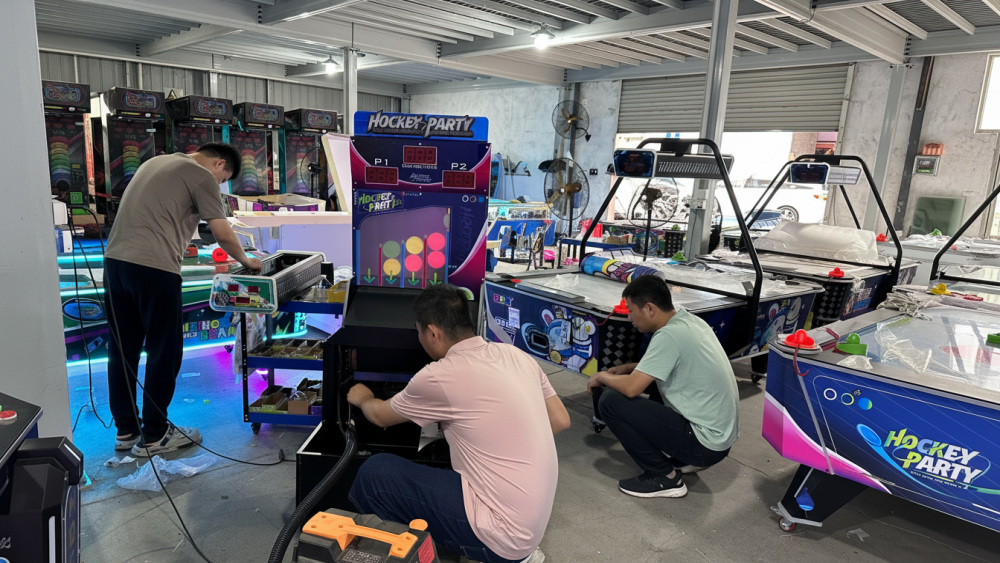
For fish game machines, PCB support should be checked as a complete system. The board, I/O control, player count, language setting, difficulty setting, payment signal, and wiring layout must match. For example, the Dragon Slayers Fish Game PCB Kit shows why replacement boards should be matched with the machine setup, not chosen only by price.
Matching Parts Matter More Than Cheap Parts
In arcade repair, the cheapest part is not always the lowest-cost choice. A replacement part must match the machine model, voltage, connector, software version, payment system, player count, and wiring layout.
NIST research on manufacturing machinery found that companies relying more on preventive and predictive maintenance had 52.7% less unplanned downtime than those relying more heavily on reactive maintenance. Arcade machines are a different industry, but the lesson is still useful: preparing parts and support before failure is usually better than reacting after the machine is already down. You can refer to the NIST study on maintenance costs and advanced maintenance techniques.
Industry Insight
For venue owners, spare parts are not just backup items. They protect machine uptime. For distributors, technical support is not an extra service. It is part of the product value.
Experienced buyers usually look beyond the cabinet price. They ask whether the supplier can provide long-term PCB supply, I/O board matching, power supplies, buttons, joysticks, wiring harnesses, payment system support, test videos, and clear remote guidance.
The operators who manage downtime better usually do not separate machines, spare parts, and technical support. They treat them as one operating system.
Final Thoughts
Arcade machine downtime cannot be fully avoided, but it can be reduced. The practical way is to prepare common spare parts, confirm part matching before buying, and work with a supplier that can provide real technical support after shipment.
For operators, distributors, and repair buyers, a reliable arcade machine supplier should provide more than cabinets. Stable spare parts supply, matching PCB and I/O support, payment system guidance, test videos, and practical after-sales help are what keep commercial arcade machines running longer.
Need Factory Direct Fish Game Solutions?
Contact FUSEN for fish game machines, PCB kits, cabinets, OEM/ODM customization, and long-term technical support.
Get Factory Quote