
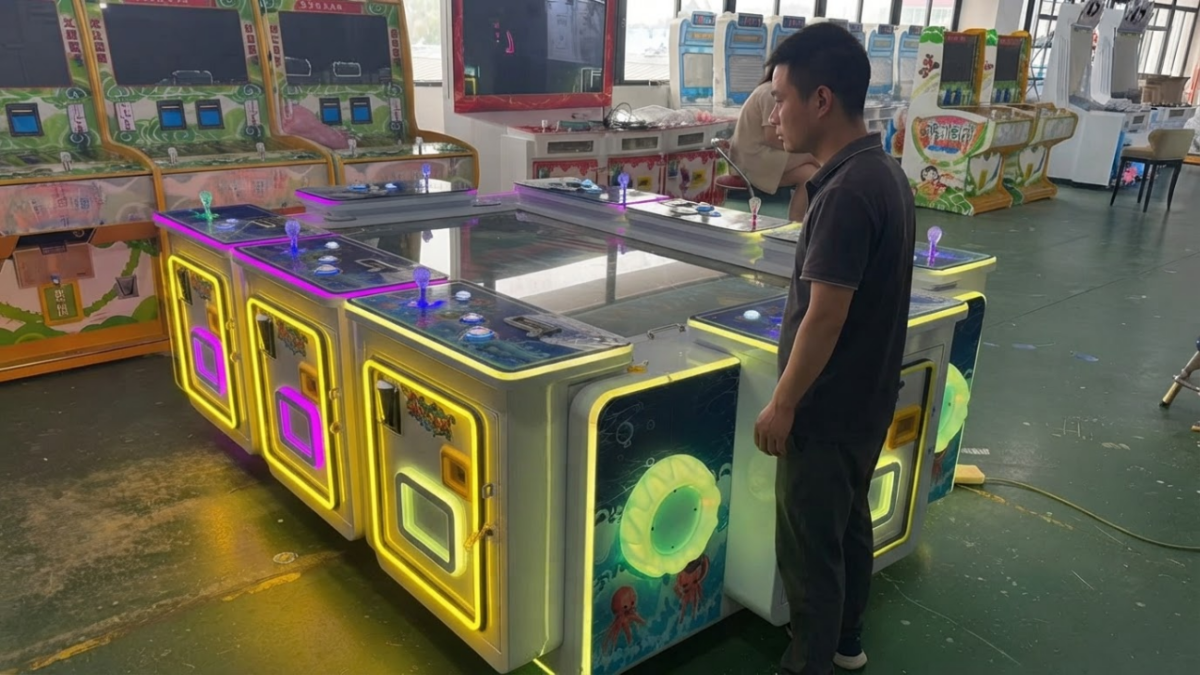
How much electricity does an arcade machine use? It depends on the machine’s actual running power, operating hours, and hardware configuration. For arcade operators, the simplest way to estimate electricity costs is to measure the machine’s power consumption, convert it into kilowatt-hours (kWh), and apply the venue’s electricity rate.
A small arcade cabinet and a large multiplayer fish table won’t necessarily have similar power requirements. Before buying equipment, it’s worth checking the numbers rather than relying on a supplier’s general estimate.
How Much Power Does an Arcade Machine Actually Use?
There is no standard wattage for every arcade machine. A cabinet’s electricity use depends on its display, game board, lighting, cooling system, and other installed components.
A multiplayer fish table, for example, may have a large screen, several player stations, speakers, and decorative LED lighting. A machine with motors or moving mechanisms can have a different operating load.
One detail often causes confusion: an 800W power supply does not mean the machine continuously consumes 800W. The power supply rating describes its output capacity. Actual electricity drawn from the wall depends on the connected equipment, operating load, and power supply efficiency.
If you’re comparing machines such as an 8-player commercial fish table, ask for the power requirements of the exact configuration being quoted.
How to Calculate Arcade Machine Electricity Costs
Once you know the average running power, the calculation is straightforward:
Daily electricity use (kWh) = Watts × Operating hours ÷ 1,000
Daily energy cost = Daily kWh × Electricity rate per kWh
This follows the relationship between power, time, and energy explained in the U.S. Department of Energy’s energy education materials.
Example: Running an Arcade Machine for 12 Hours
Suppose a machine averages 600W, runs 12 hours per day, and the venue pays an assumed rate of $0.15 per kWh.
| Item | Example |
|---|---|
| Average running power | 600W |
| Daily operating hours | 12 hours |
| Daily electricity use | 7.2 kWh |
| Daily energy cost | $1.08 |
| 30-day energy cost | $32.40 |
These are example figures, not measured Fusen product specifications or verified local electricity rates. Actual commercial bills may include demand charges, fixed fees, and taxes.
For a game room with several machines, calculate each model separately. Using one estimated wattage for the entire floor can lead to a misleading budget.
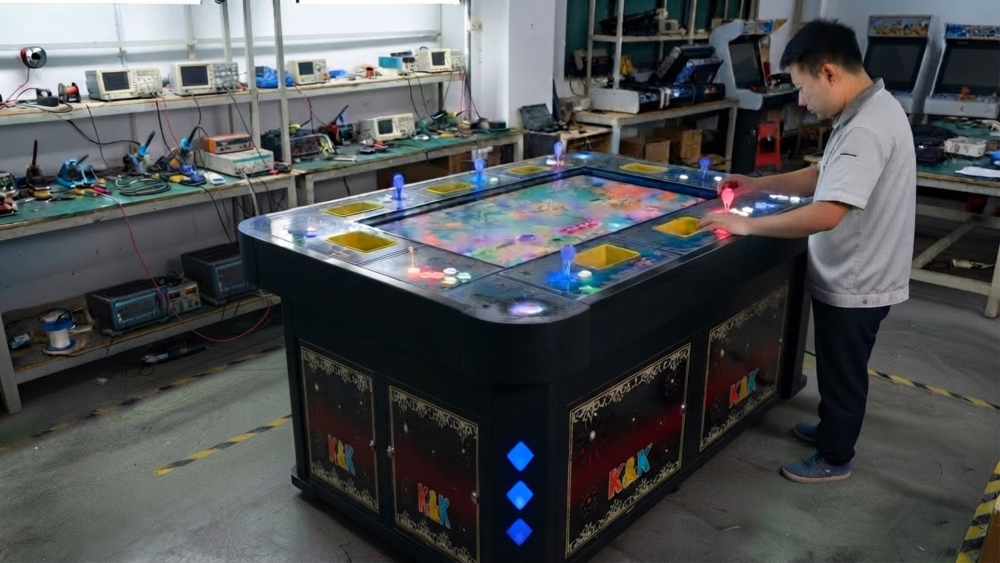
How to Measure Actual Power Consumption
A single wattage reading doesn’t tell the whole story. Machines can draw different amounts of power while starting, waiting for players, and running a game.
For a useful measurement, ask the supplier or a qualified technician to check:
- Power consumption during startup.
- Idle or attract-mode consumption.
- Average power during normal gameplay.
- Power demand with multiple player stations active.
A properly rated power meter can help record these differences. For cost planning, a representative operating-period average is more useful than the highest number displayed for a moment. Internal electrical testing should be performed by qualified personnel.
What Affects Arcade Machine Electricity Use?
Displays, game PCBs, lighting, fans, speakers, payment devices, and motors all contribute to a machine’s electrical load. Changing one component may change the overall power requirement.
For example, replacing a screen means checking the new monitor’s voltage, power requirements, and compatibility with the cabinet. Buyers sourcing a commercial fish game monitor should confirm the specifications of the selected model rather than assuming it matches the original.
For distributors ordering multiple machines, it’s also worth confirming whether each production batch uses the same electrical components.
What Should Buyers Check Before Ordering?
Before placing a commercial arcade equipment order, ask the supplier to confirm:
- Input voltage, frequency, and rated current.
- Actual running power, if measured.
- Power supply and plug specifications.
- Installed screens, lighting, and additional electrical hardware.
- Electrical documentation for the exact configuration.
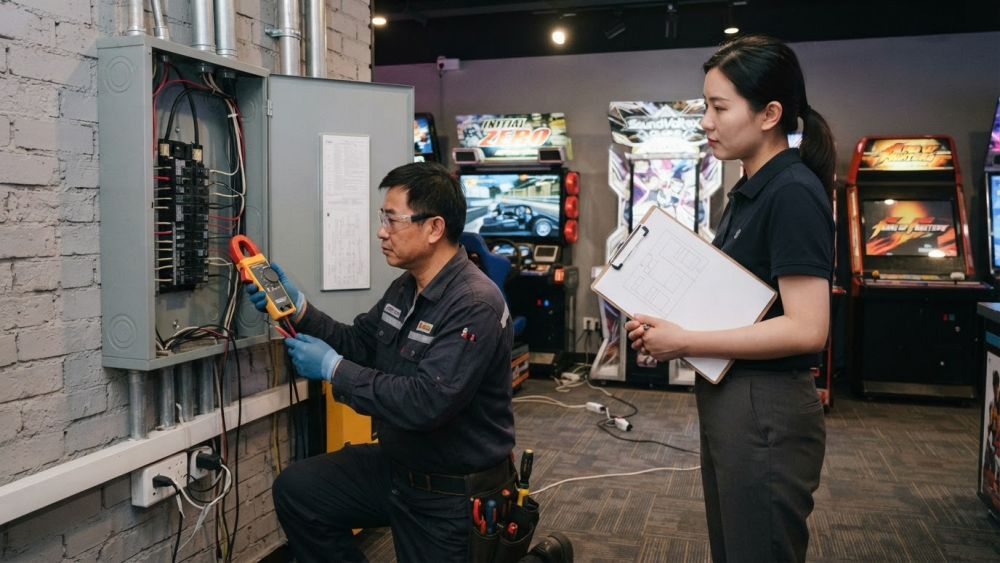
For U.S. and Canadian venues, have a qualified local electrician check circuit capacity and applicable installation requirements. Also review your utility tariff: as the U.S. Department of Energy’s electricity billing guide explains, commercial electricity costs can involve more than energy consumption alone.
Industry Insight: Power Specifications Matter Beyond the Electricity Bill
For a game room operator, a small difference in estimated electricity cost may matter less than finding out that a machine needs electrical work before it can be installed.
For distributors, incomplete power specifications can create another problem: replacement parts or later production batches may not match the original configuration.
The better approach is to keep electrical specifications with each machine’s purchasing records. They become useful again when planning another order, replacing a monitor, or expanding the venue.
Final Thoughts
Arcade machine electricity costs are best estimated from measured running power, actual operating hours, and the venue’s electricity rate. A power supply rating alone won’t give you a reliable monthly cost.
Fusen Electronics supplies commercial fish game equipment and related components. If you’re planning an order, contact our team with your target market, equipment requirements, expected quantity, and electrical specifications to discuss available configurations.
Need Factory Direct Fish Game Solutions?
Contact FUSEN for fish game machines, PCB kits, cabinets, OEM/ODM customization, and long-term technical support.
Get Factory Quote