
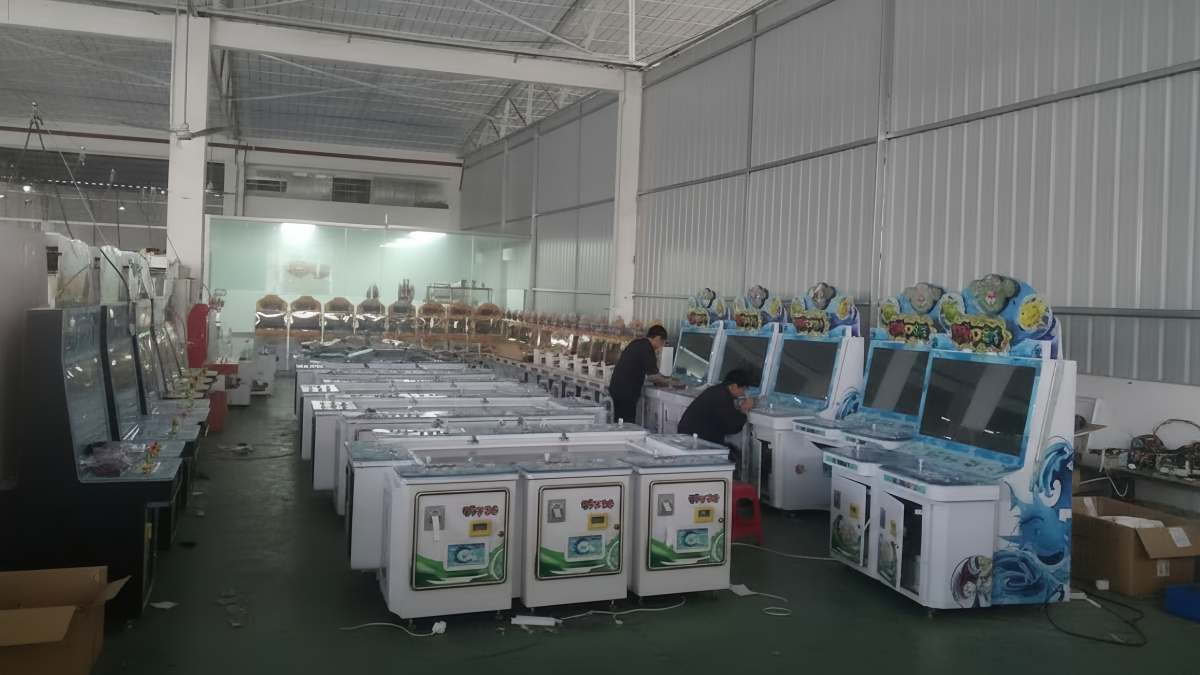
A finished fish game machine can look impressive from the outside. The cabinet may look clean, the screen may be bright, and the game may start normally. But for venue owners, distributors, and maintenance buyers, the real question is what happened before the machine was packed.
A reliable fish game machine is built through several practical steps: cabinet preparation, PCB and I/O board installation, wiring, software setup, function testing, final inspection, and packing. These steps are not complicated to understand, but they are important. A machine that is assembled carefully is usually easier to install, easier to service, and safer to sell to end customers.
Why Buyers Should Look at the Factory Process
Many buyers compare machines by price, game title, screen size, or cabinet design. Those details matter, but they do not tell the whole story. A low-price machine can become expensive if the wiring is hard to access, the spare parts are not available, or the supplier cannot explain how the machine was tested before shipment.
For a game room owner, downtime means lost play time. For a distributor, unstable quality means more after-sales pressure. For a maintenance buyer, poor internal layout means every repair takes longer. This is why the factory process should be part of the buying decision.
ISO explains that ISO 9001 defines requirements for a quality management system, including how an organization establishes, maintains, and improves its process. This does not mean every factory must describe its work in the same way, but it does show why controlled steps are important in manufacturing.
Cabinet Preparation Is More Than Appearance
The cabinet is the base of a fish game machine. Before the screen, PCB, buttons, or joystick parts are installed, the cabinet should be checked for structure, surface condition, access doors, locks, screw points, and control panel position.
For commercial use, the cabinet needs to handle daily operation, cleaning, player contact, and transportation. A nice-looking cabinet is not enough if the door is hard to open, the inside space is too tight, or the screen frame is not fitted properly.
Good cabinet preparation makes later work easier. Technicians can install boards more neatly, arrange wiring more clearly, and leave enough space for future maintenance.
PCB, I/O Board, Wiring, and Power Supply Installation
After the cabinet is ready, the factory installs the internal control system. This usually includes the main PCB, I/O board, power supply, wiring harness, speakers, buttons, joysticks, and payment parts such as a coin acceptor, bill acceptor, or card system.
This is where maintenance buyers often pay close attention. Clean wiring and secure connectors make future repair easier. A good internal layout also helps technicians identify problems faster when a button, joystick, I/O board, or power supply needs replacement.
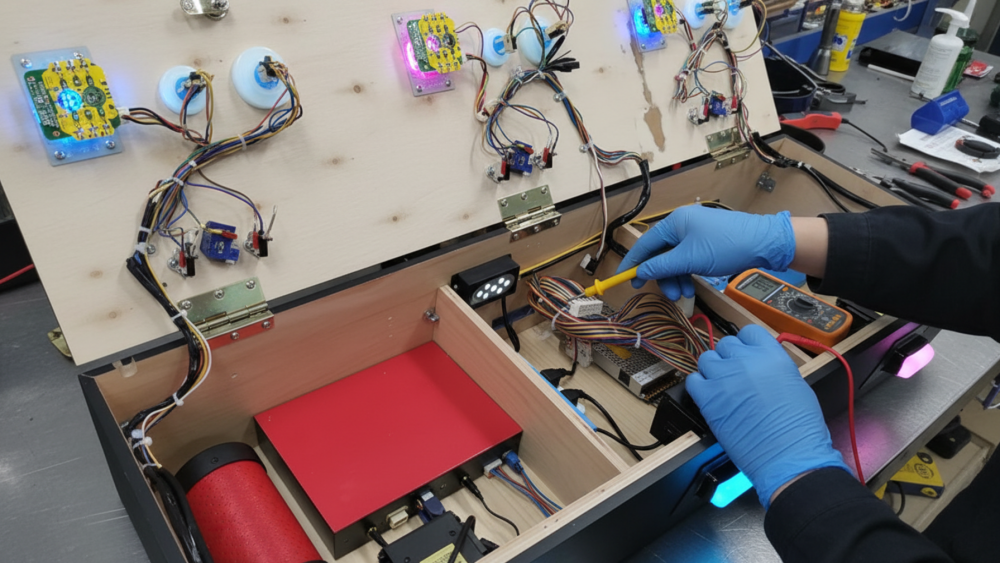
Wiring should not be treated as a small detail. In a broader industrial safety context, NFPA research on industrial properties reported that wiring and related equipment accounted for 12% of fires, 13% of civilian injuries, and 8% of direct property damage within the electrical distribution, lighting, and power transfer equipment category. That report is not specific to arcade machines, but it is a useful reminder that wiring quality, connectors, power supply placement, and internal organization deserve careful handling. You can review the NFPA industrial and manufacturing fire report for the original safety reference.
Software Setup and Real Function Testing
A fish game machine is not only hardware. The software controls the game display, player positions, button response, sound, credit input, and system settings. A machine can look complete from the outside but still need proper software testing before shipment.
For multi-player machines, each player station should be checked. The factory should test buttons, joysticks, credit input, audio, screen display, and basic game operation. Testing only one side of the machine is not enough for commercial use.
Overseas buyers can ask for a simple test video before shipment. It does not need to be a marketing video. A real short clip showing the screen, control panel, credit input, and player response is often more useful than polished photos.
Aging Test and Final Quality Check
A machine that powers on once is not always ready for shipment. Some issues appear only after the machine runs for a longer period. This is why many factories use a running test or aging check to observe screen display, power stability, control response, sound, and possible connection problems.
Before packing, the factory should check the machine as a complete product. Buyers can ask the supplier to confirm:
- Screen display and sound output
- Buttons, joysticks, and control response
- Main PCB, I/O board, and wiring connection
- Power supply and voltage setting
- Coin, bill, or card payment system
- Software settings and player positions
- Spare parts, keys, accessories, and packing list
This step is especially important for distributors. A machine that fails after resale may create extra service cost and weaken customer trust. A clear pre-shipment check helps reduce that risk.
Packing and Export Preparation
Packing is not the most attractive part of production, but it matters for overseas buyers. Fish game machines are heavy and may include screens, control panels, lighting, wiring, and cabinet surfaces that need protection during transport.
Depending on the machine and shipping method, packing may include protective film, foam, corner protection, carton covering, wooden frame, or wooden crate. Buyers should also confirm whether spare parts, keys, cables, and accessories are included before shipment.
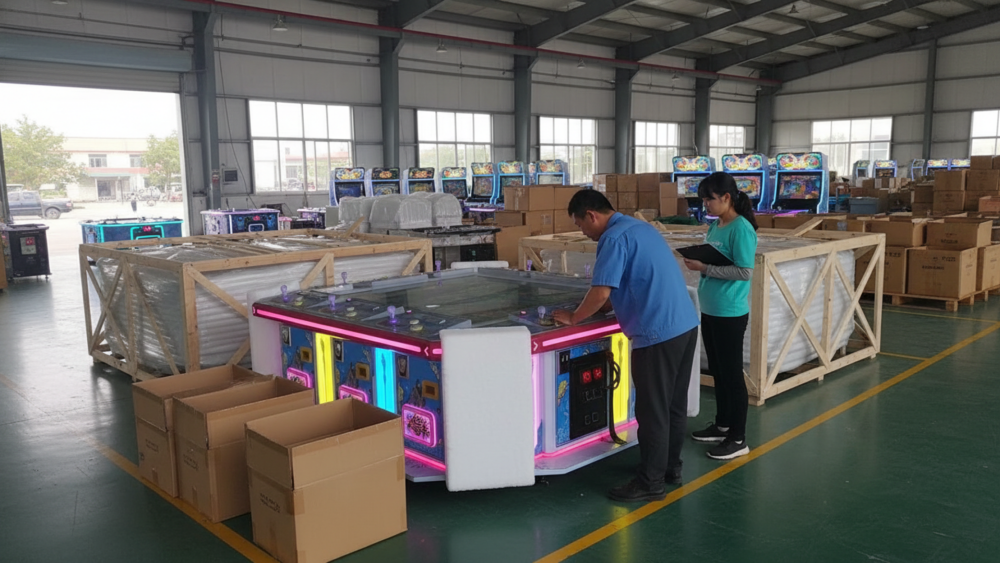
A practical supplier should be able to send packing photos. These photos are simple, but they help buyers confirm that the machine is protected and ready for export.
What Buyers Should Ask Before Shipment
Before a fish game machine leaves the factory, buyers should ask practical questions. Can the supplier show a real test video? Can it provide internal wiring photos? Are spare parts available? What is the warranty process? How are PCB, buttons, joysticks, and payment parts replaced if needed?
These questions help buyers understand whether the supplier can support real operation, not just the first sale. A strong supplier should understand installation, maintenance, spare parts, and long-term support.
For a broader supplier evaluation process, you can also read our guide on how to choose a reliable fish game machine manufacturer in China. If you are planning a complete venue, our article on commercial arcade machines for game rooms can also help with equipment planning.
Final Thoughts
A fish game machine factory should not be judged only by finished photos. The more useful signs are often found in the process: cabinet preparation, clean wiring, stable PCB installation, real function testing, final inspection, and export packing.
For venue owners, distributors, and maintenance buyers, these details are practical. They affect installation, repair time, customer service, and long-term operation. A machine that is built and checked carefully may not look very different in a photo, but it is usually easier to manage after it reaches the game room.
Need Factory Direct Fish Game Solutions?
Contact FUSEN for fish game machines, PCB kits, cabinets, OEM/ODM customization, and long-term technical support.
Get Factory Quote