
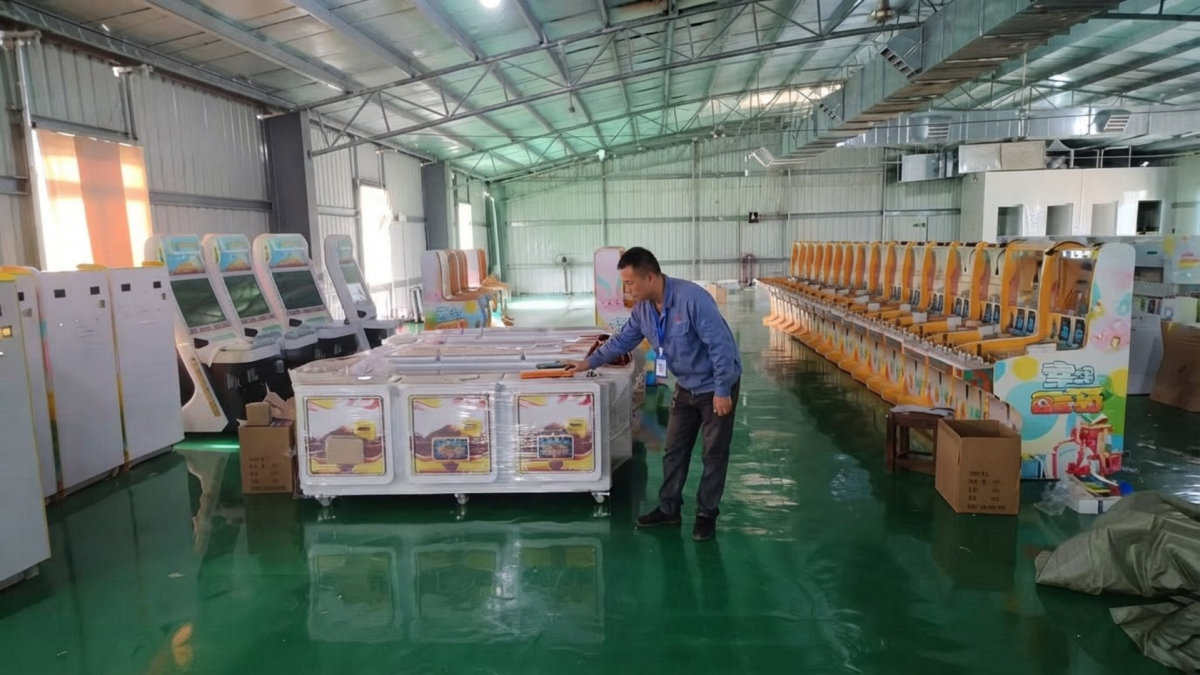
An OEM arcade machine sample should not be approved simply because the cabinet looks correct and the game starts successfully. Once approved, that machine becomes the production reference for the entire order.
A wrong logo position, uncomfortable control layout, incorrect credit setting, or mismatched power configuration may appear minor on one sample. Repeated across a full batch, the same issue becomes expensive to correct.
For distributors, venue operators, and technical buyers, sample approval should answer one practical question: can the factory reproduce this exact machine consistently and support it after delivery?
Treat the Sample as the First Production Unit
A sample is not only a showroom machine. It should represent the cabinet, controls, electronics, software, payment configuration, and service access that will be used in mass production.
The ISO 9001 Auditing Practices Group guidance emphasizes the use of objective evidence when confirming that design requirements and intended use have been fulfilled.
For an arcade project, that means testing the machine as it will actually be installed, played, paid, maintained, and repaired.
Check the Cabinet Before Testing the Game
Start with details that become difficult to change after batch production:
- Cabinet dimensions, screen size, color, artwork, and logo position
- Control-panel height, player spacing, and operating comfort
- Door locks, wheels, ventilation, lighting, and panel alignment
- Access to the PCB, power supply, wiring, and payment parts
Do not approve artwork only from a rendering. Ask for clear photos of the finished cabinet, including corners, door edges, printed colors, control-panel alignment, and areas where stickers meet removable panels.
Service access also matters. A machine may look clean from the outside but create unnecessary maintenance work if the power supply, I/O board, or wiring connectors are difficult to reach.
Test Every Player Position
On a multiplayer machine, testing one position does not confirm the whole cabinet.
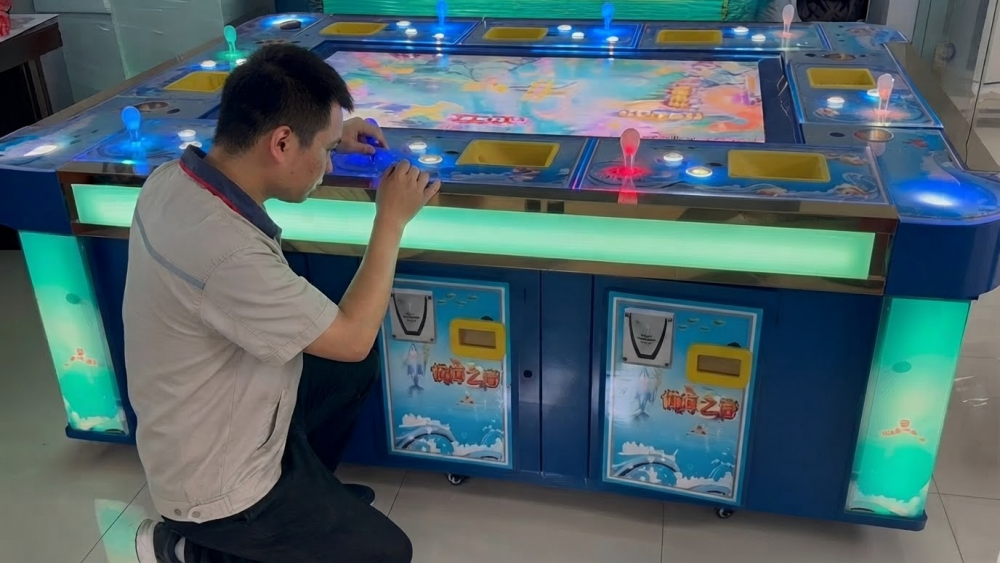
Each position should be tested separately for button response, joystick direction, credit input, sound, game control, and player numbering. On 6-player, 8-player, or 10-player machines, the test video should clearly show every position working.
This is also the right time to check whether the control layout feels natural. Incorrect button spacing or an awkward joystick position may not cause a technical failure, but it can affect real venue operation and customer experience.
Confirm the PCB, Software, and Settings
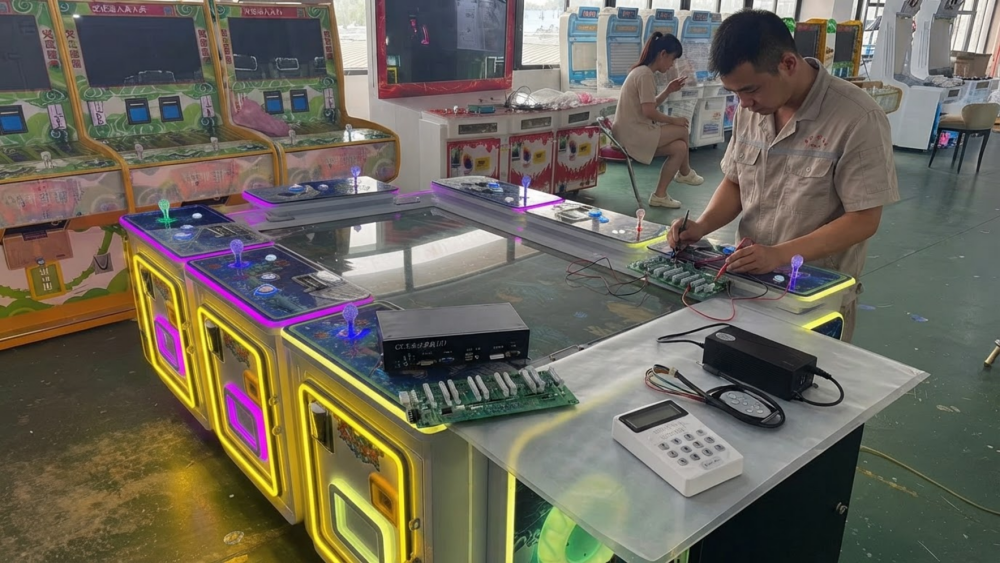
Software approval should include more than the game name. Confirm the PCB model, software version, language, number of players, difficulty range, screen output, boot screen, sound, and settings menu.
Restart the machine and check that important settings remain saved. The test should also show normal startup, game entry, credit addition, each player position, and recovery after a standard restart.
Our fish game machine PCB replacement guide explains why the PCB, I/O board, software, display output, payment system, and player configuration should be checked as one system.
Test the Payment System in the Complete Machine
A coin acceptor or card reader may work on a bench and still fail after installation if the voltage, signal type, connector, I/O board, or credit logic does not match.
Test coin or card input at every relevant player position. Confirm the credit value, pulse setting, cancellation behavior, and restart behavior. When a local card system will be installed after delivery, provide its interface and signal requirements before mass production.
Our arcade card reader and coin acceptor guide covers the main compatibility points for commercial payment systems.
Verify the Final Electrical Configuration
Confirm the voltage, frequency, plug type, power supply, fuse protection, grounding, connector layout, and internal cable routing against the purchase specification.
A 110V order should not be approved only from a 220V workshop demonstration. The sample or final verification record should reflect the electrical version that will actually be shipped.
Before opening the cabinet or handling internal electrical parts, disconnect the supply and verify that the relevant parts are de-energized. The OSHA 1910.333 electrical safety standard requires exposed live parts to be de-energized before relevant work, except in limited circumstances. Energized testing should be handled by qualified personnel.
Approve the Sample with Evidence
A useful approval package should include cabinet photos, the control-panel layout, PCB and software details, payment settings, electrical specifications, accessory list, and a complete test video.
The video should show startup, display output, sound, every player position, payment input, settings, restart, and normal operation. Short clips that only show the machine running do not provide enough evidence for production approval.
If a problem is found, record the correction and request updated evidence. Do not release the batch for production until every open issue has been closed in writing.
For regulated markets, the approved machine should also match the relevant technical documentation. The EU’s technical documentation guidance states that such records should cover product design, manufacture, and operation when demonstrating compliance with applicable requirements.
Industry Insight
The real purpose of sample approval is not to prove that one machine works. It is to define exactly what the factory must reproduce.
For distributors, the approved sample also becomes an after-sales reference. When the PCB, software, controls, power supply, payment interface, wiring, and spare parts are recorded, future troubleshooting becomes faster and replacement orders are less likely to be wrong.
Verbal approval is easy to reinterpret later. A configuration sheet, clear photos, and complete test evidence give the buyer, factory, and maintenance team one shared version of the product.
Final Thoughts
Review an arcade machine sample as the first unit of the production order, not as a showroom display.
Confirm the cabinet, controls, software, payment system, electrical configuration, service access, and approval records before mass production begins. Once approved, keep that information as the reference for inspection, spare parts, after-sales support, and repeat orders.
Need Factory Direct Fish Game Solutions?
Contact FUSEN for fish game machines, PCB kits, cabinets, OEM/ODM customization, and long-term technical support.
Get Factory Quote