
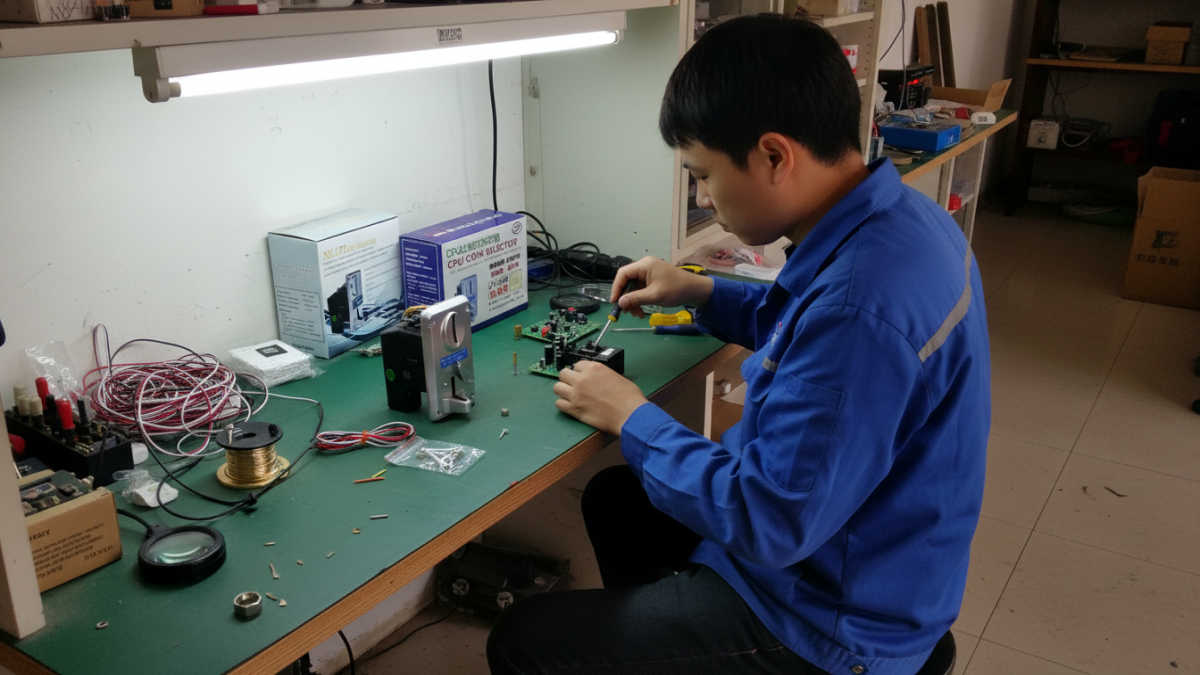
For commercial arcade machines, the payment part is not just an accessory. It is the first step of every paid play. If the arcade card reader does not respond, the coin acceptor counts wrongly, or the signal does not reach the game board, the machine may power on but still fail to make money.
For arcade operators, distributors, and repair buyers, the better question is not “which payment part is cheaper?” It is: will this card reader or coin acceptor match the machine’s wiring, I/O board, software setting, player configuration, and daily operation?
Quick Answer: Card Reader or Coin Acceptor?
Card readers are useful for venues that already use a card-based arcade management system. Coin acceptors are still practical for simple token operation, small game rooms, repair replacement, and markets where coins or tokens are easy for staff to manage.
Federal Reserve payment research shows that payment habits are changing, but cash has not disappeared. Its 2026 Diary of Consumer Payment Choice says cash remained the third-most used payment instrument, while debit and credit cards accounted for about two-thirds of consumer payments. You can refer to the 2026 Diary of Consumer Payment Choice for the original payment data.
| Payment option | Best for | Check first |
| Arcade card reader | Card-based venues, malls, FECs, larger operations. | Voltage, interface, software support, I/O signal. |
| Coin acceptor | Token game rooms, simple operation, repair replacement. | Coin type, pulse setting, wiring plug, mounting size. |
Why Payment Parts Matter in Real Operation
A button problem may affect one player position. A payment problem can stop the whole machine from being used. This is why payment parts should be planned before production or repair, not treated as a last-minute add-on.
In a coin-operated basketball machine, the payment part must match the cabinet opening, control system, power supply, and software credit logic. Buyers comparing this kind of setup can review the Adult Basketball Arcade Machine as a product-level reference for coin operation and custom payment support.
What to Check Before Buying a Card Reader
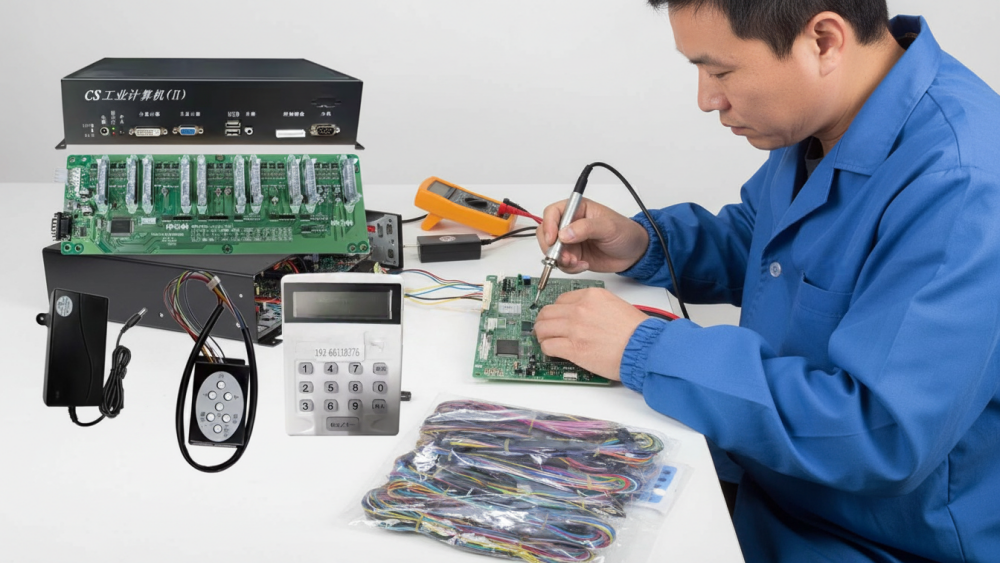
An arcade card reader should be checked as part of the complete machine, not as a separate small device. Before ordering, confirm the reader type, voltage, mounting space, power connection, signal method, software support, and I/O board compatibility.
If the reader lights up but the game does not add credits, the reader may not be the real problem. The issue may come from signal wiring, I/O matching, software configuration, or an unsupported interface.
What to Check Before Buying a Coin Acceptor
Coin acceptors are still useful in many arcades because token operation is simple, familiar, and easy for staff to manage. But the outside shape is not enough for matching.
Before buying an arcade coin acceptor, check coin type, pulse setting, voltage, wiring plug, installation size, and software support. A different pulse setting or connector can cause wrong credit counting even when the part looks similar.
For repair buyers, the safest step is to send the supplier a photo of the old coin acceptor label, wiring connector, machine model, and payment setting before ordering.
Wiring and I/O Matching Are the Real Key
Most payment problems are not caused by the visible payment part alone. The fault may be in the wiring harness, I/O board, signal port, power connection, or software setting.
If the card reader has power but the machine does not respond, check the signal wire and I/O board first. If the coin acceptor accepts coins but credits are not added correctly, check the pulse setting and software configuration.
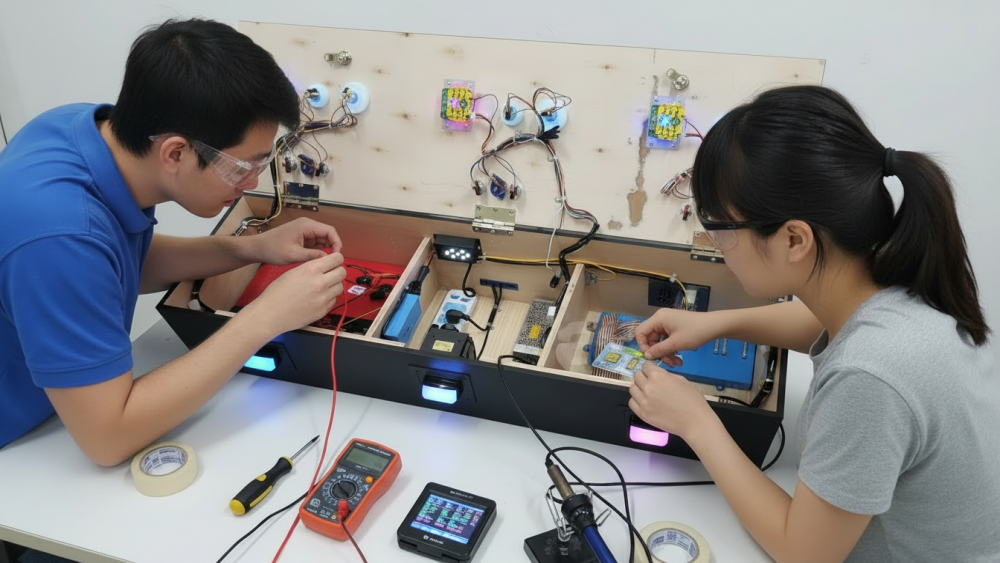
For air hockey tables and other family entertainment machines, payment access, cabinet space, and software signal should be checked together. The Polar Bear Air Hockey Arcade Machine is a useful example of why custom payment support should be considered together with cabinet structure and operation style.
Do Not Ignore Card Payment Security
When card readers are used in public venues, payment security also matters. Buyers do not need to become payment security experts, but they should avoid unclear or unsupported card reader solutions.
The PCI Security Standards Council explains that PCI DSS provides a baseline of technical and operational requirements designed to protect payment account data. You can review the official PCI DSS payment security standard.
For operators and distributors, the practical point is simple: use reliable payment systems, confirm installation requirements, and make sure future technical support is available.
Industry Insight
For venue owners, the payment system is not a small part hidden inside the cabinet. It is the entry point of revenue. If players cannot pay smoothly, the machine loses value no matter how good the screen, cabinet, or game software looks.
For distributors, payment parts often become after-sales pressure when they are not matched before shipment. A card reader, coin acceptor, I/O board, wiring harness, and software setting should be confirmed as one system.
Experienced buyers do not only ask whether a machine supports card readers or coin acceptors. They ask whether the supplier can provide correct wiring, I/O matching, software configuration, test video, and replacement parts later.
Final Thoughts
Choosing an arcade card reader or coin acceptor should be part of full machine planning. Buyers should check voltage, wiring, signal type, I/O board matching, software support, installation space, and after-sales parts supply before ordering.
For operators, a reliable payment system helps reduce lost play opportunities. For distributors and repair buyers, correct matching is more important than buying the cheapest payment part.
Need Factory Direct Fish Game Solutions?
Contact FUSEN for fish game machines, PCB kits, cabinets, OEM/ODM customization, and long-term technical support.
Get Factory Quote