
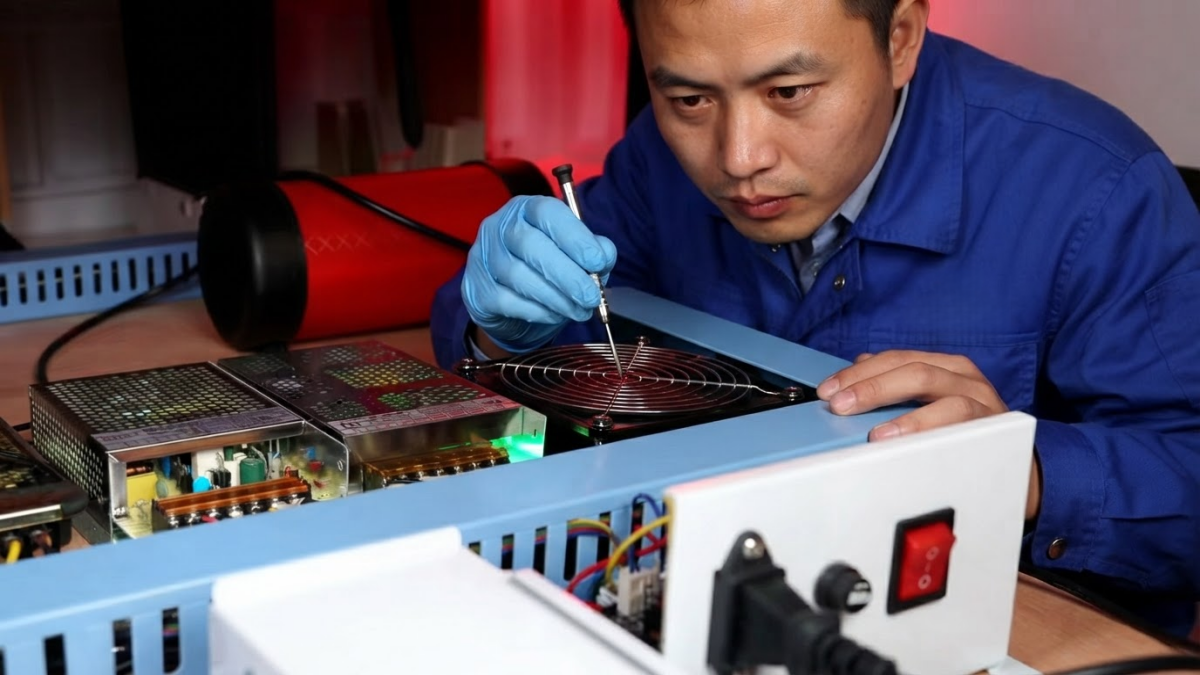
An arcade wiring harness costs far less than a PCB, monitor, or power supply, but one loose terminal or incorrectly wired connector can stop a player position, payment system, display, or complete machine.
Replacing the harness is usually straightforward. Identifying the correct replacement is where most mistakes happen.
For game room operators, distributors, and repair buyers, connector shape and wire color are not enough. The replacement must match the machine, board, pinout, voltage, signal function, length, and installation position.
Why Wiring Faults Are Easy to Misdiagnose
A damaged harness can create symptoms that look like a board failure: one player position stops responding, buttons work intermittently, card credits disappear, the screen flickers, or the machine restarts during play.
Before replacing a PCB or I/O board, inspect the related wiring at both ends. Look for backed-out terminals, bent pins, overheated connectors, damaged insulation, loose ground wires, and previous modifications.
Our fish game machine PCB replacement guide explains why power, wiring, I/O connections, and software settings should be checked before a main board is judged faulty.
What Information Identifies the Correct Harness?
A machine name alone is rarely enough. A useful parts request should include:
- Machine model and number of player positions
- Main PCB and I/O board photos
- Harness function and installation location
- Front and rear photos of both connectors
- Pin count, keying position, and wire order
- Overall length and branch lengths
- Voltage or signal information where available
The connector front shows the pin positions and locking shape. The rear shows the wire order and terminal entry. When size is unclear, place a ruler beside the connector instead of estimating it from the photo.
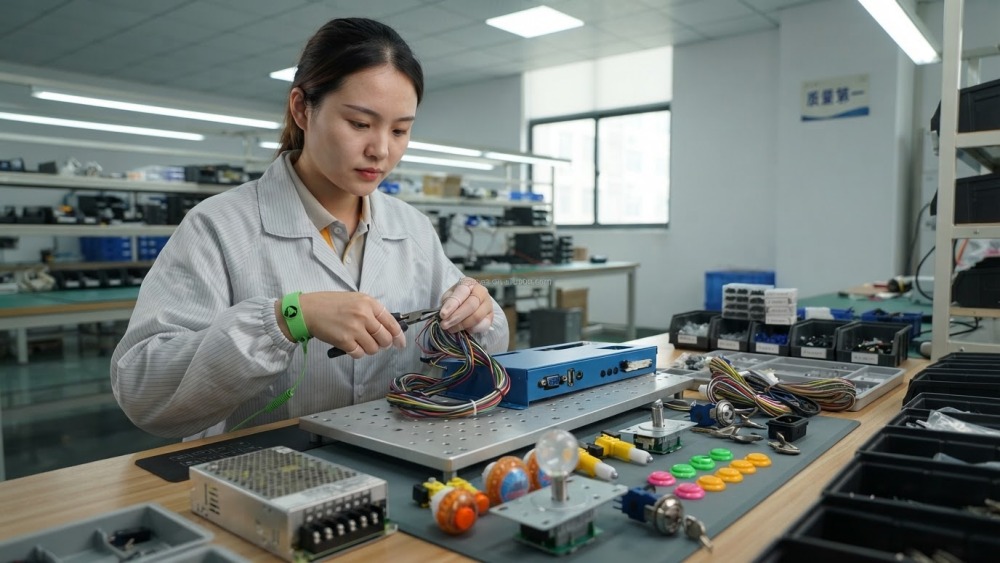
A Matching Plug Does Not Confirm a Matching Pinout
Two plugs can fit the same socket and still be wired differently. A pin used for ground in one machine may carry power or a control signal in another.
This risk is higher with older cabinets, repaired machines, and equipment converted from coin operation to a card system. The housing may remain unchanged while the internal wiring has been modified.
Do not connect an unknown harness simply to see whether it works. Confirm the pinout and voltage before connecting it to a PCB, I/O board, display, power supply, or payment device.
Common Arcade Wiring Harness Types
Control Harnesses
Button and joystick harnesses connect each player position to the I/O or control board. Confirm the number of controls, terminal size, common-ground arrangement, joystick plug, and player position.
Power and Ground Harnesses
These require accurate voltage, polarity, wire size, terminal, fuse, and grounding confirmation. A physically compatible connector does not prove that the electrical specification is correct.
Payment and Credit Harnesses
Coin acceptors and card readers may use power, ground, pulse, enable, or communication connections. The signal type and credit setting must match the I/O board and software, not only the payment device.
Our arcade card reader and coin acceptor guide covers the main voltage, signal, wiring, and software compatibility points.
PCB-to-I/O and Player Harnesses
Multiplayer fish game machines may use separate branches for different control positions. Confirm the player number, branch length, board connector location, and whether the order is for one position or the complete machine.
Check More Than Electrical Continuity
A harness can pass a simple continuity test and still fail in service because of a weak crimp, loose terminal, exposed conductor, poor strain relief, or incorrect routing.
The IPC/WHMA-A-620 standard overview covers materials, methods, tests, and acceptance criteria for cable and wire harness assemblies, including crimped and mechanically secured connections.
For normal arcade maintenance, buyers should at least check that terminals are secure, conductors are fully insulated, connector locks engage correctly, branches are supported, and cables do not rub against sharp cabinet edges or moving parts.
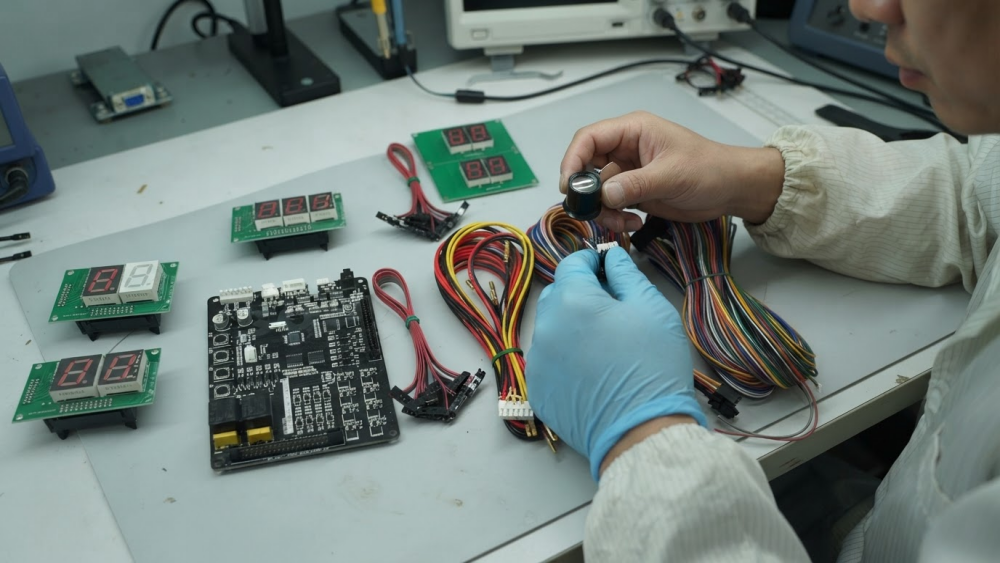
What to Send Before Ordering
Send a full machine photo, the installed harness, both connector ends, PCB and I/O board photos, the damaged area, and a short video of the fault.
Do not cut off the original plug or discard the damaged harness before documenting the wire order. Keep it until the replacement has been installed and tested.
For repeat purchases, save the confirmed photos, measurements, pinout, and part number under the machine model. This is much faster than rebuilding the same information from old messages during the next repair.
Electrical Safety Before Inspection
Disconnect the machine from its electrical supply before opening the cabinet or handling internal wiring. Confirm that the relevant circuit is de-energized rather than relying only on the machine’s front switch.
Energized testing should be left to qualified personnel using suitable test equipment. Unknown wires should never be temporarily connected by trial and error.
Industry Insight
A wiring harness is often treated as a low-value accessory. In practice, it carries power, controls, payment signals, and communication between the machine’s main systems.
For operators, standardized and clearly labeled harnesses reduce repair time. For distributors, keeping a wiring record for every machine version makes remote troubleshooting faster and reduces the risk of shipping an incompatible replacement.
The best time to photograph and record a harness is when the machine is new and working correctly—not after the damaged cable has already been removed.
Final Thoughts
Ordering the correct arcade wiring harness depends on identification, not appearance.
Confirm the machine, board, connector, pinout, voltage, length, function, and installation position. Clear records can turn an uncertain repair into one accurate parts order.
Need Factory Direct Fish Game Solutions?
Contact FUSEN for fish game machines, PCB kits, cabinets, OEM/ODM customization, and long-term technical support.
Get Factory Quote