
Arcade operators usually discover configuration problems after a machine stops working.
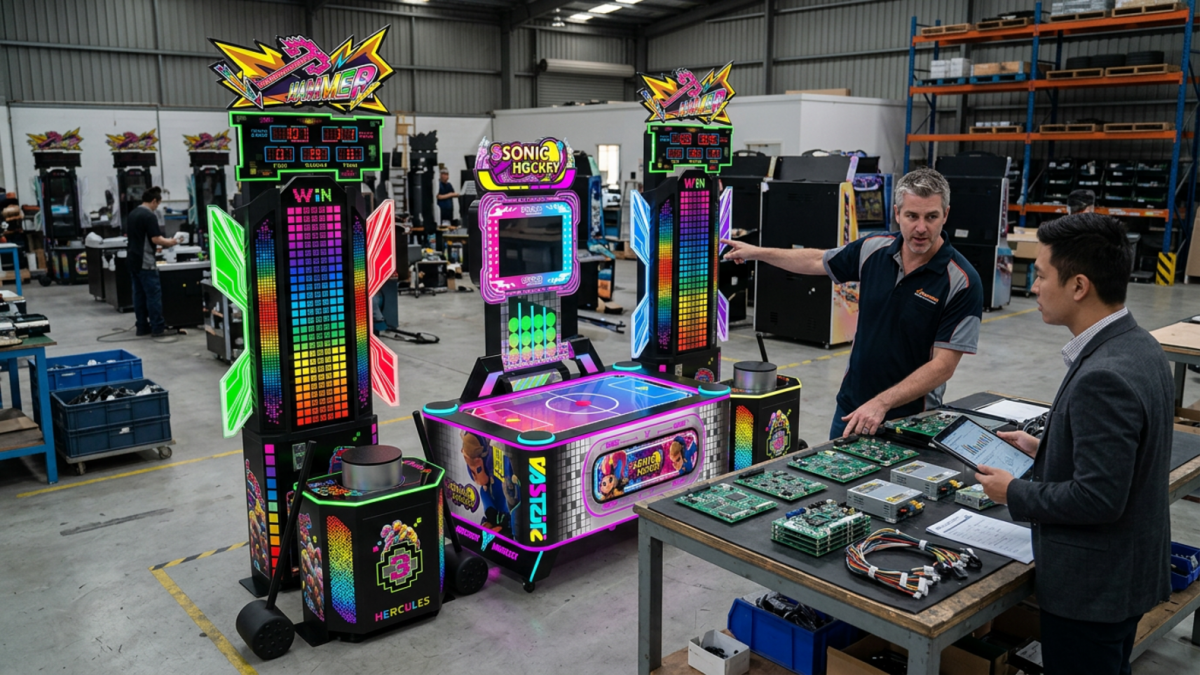
Two cabinets may look almost identical but use different PCBs, wiring harnesses, power supplies, payment signals, or software versions. The failed component may be inexpensive, yet confirming the correct replacement can take longer than the repair itself.
Standardization reduces that uncertainty. It does not mean selling identical machines. It means limiting the number of internal platforms that operators, distributors, and technicians must identify and support.
What Should Be Standardized?
Customer-facing features can remain flexible. Cabinet colour, artwork, logo, language, packaging, and boot screen can be customized without rebuilding the entire maintenance system.
The parts that require tighter control are those that determine compatibility:
- PCB and I/O board platforms
- Software versions and operating settings
- Power supplies and voltage configuration
- Wiring harnesses and connector layouts
- Buttons, joysticks, and control components
- Coin acceptor and card-reader interfaces
- Screen connections and common spare parts
The objective is not to eliminate every variation. It is to stop a small purchasing change from creating a completely new service platform.
Configuration Variety Slows Down Repairs
When a machine fails, the technician needs three answers quickly: what is installed, what is compatible, and what is available.
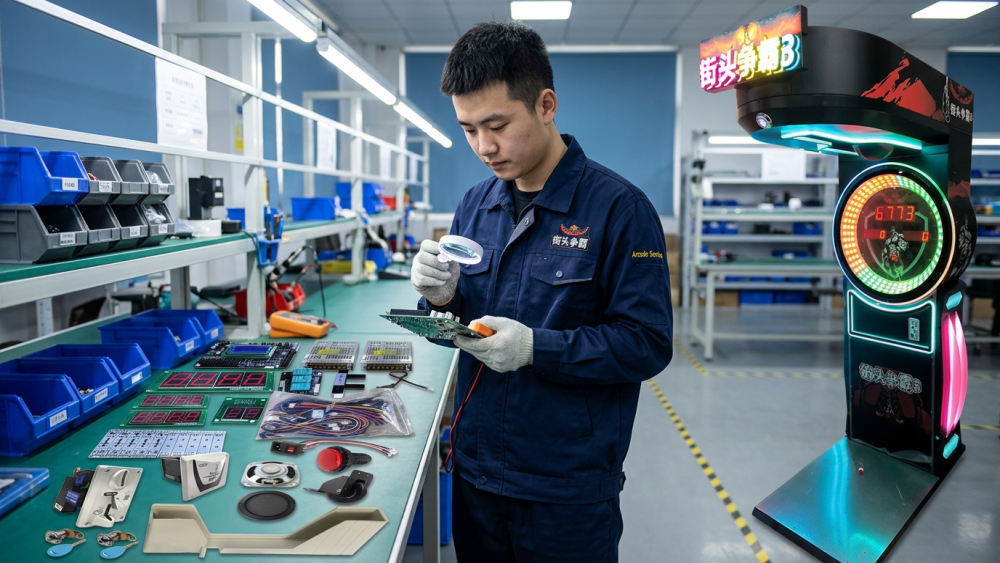
Without reliable records, customers may send several rounds of photos before the PCB, connector, software version, or payment setting is confirmed. For overseas operators, that identification process can take longer than replacing the component.
The same problem affects spare-parts purchasing. If five similar machines use different harnesses or power supplies, the operator must stock every version or accept longer downtime while the correct part is identified and shipped.
A NIST study of manufacturing machinery found 52.7% less unplanned downtime and 78.5% fewer defects among surveyed firms relying more on preventive and predictive maintenance than those relying more heavily on reactive maintenance.
These figures are not arcade-machine statistics. The relevant lesson is that maintenance becomes easier when inspection, documentation, and parts planning begin before a breakdown.
Our article on arcade machine downtime explains why diagnosis and parts matching can matter more than the price of the failed component.
Keep Customization Above a Stable Service Platform
A practical OEM strategy is to separate what customers see from what technicians must maintain.
Different machines can use unique artwork, colours, logos, cabinet styling, and market languages while sharing the same connector family, control components, power system, payment interface, and PCB platform.
This preserves product variety without multiplying spare-parts and support requirements at the same rate.
Our guide to custom arcade machine production explains which hardware, software, payment, and cabinet details should be confirmed before manufacturing begins.
Record Every Service-Critical Change
Standardization fails when a component changes but the machine record does not.
The ISO 10007 configuration management guideline covers configuration identification, change control, status records, and audits throughout the product life cycle.
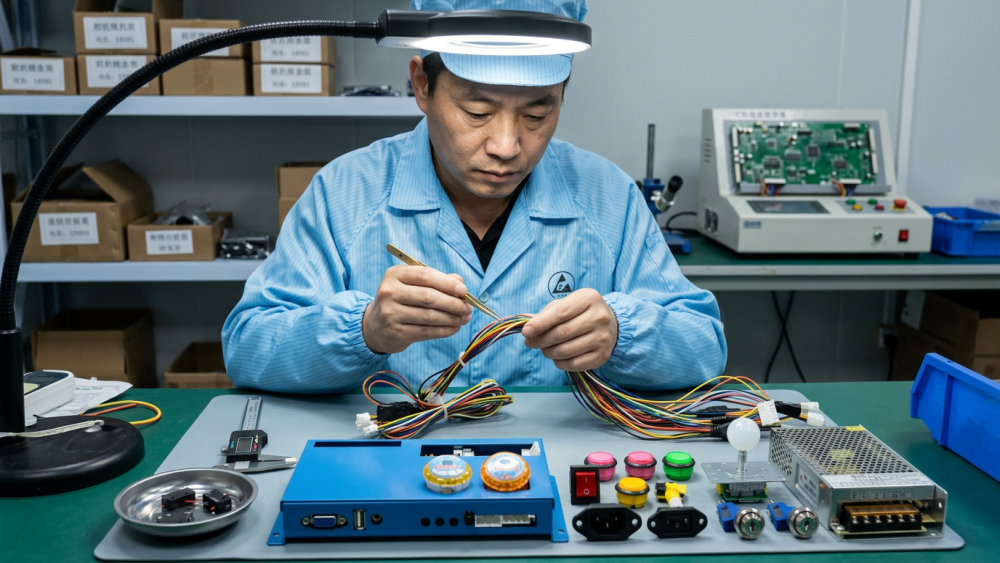
For arcade equipment, the record can be simple. Each approved model should list its PCB, software version, I/O board, harness, screen connection, power supply, payment settings, and recommended spare parts.
When one of these items changes, the buyer should know what changed, whether old parts remain compatible, and which future orders will use the new version.
A Practical System for Operators and Distributors
A useful standardization system only needs five basic records:
- An approved model and configuration list
- Clear photos of boards, connectors, and harnesses
- A standard spare-parts list for each platform
- Written approval for critical component changes
- A final test record linked to each shipment
For a venue owner, these records reduce incorrect replacement orders. For a distributor, they also reduce duplicated inventory, technician training, and repeated remote diagnosis.
Industry Insight
The most expensive spare part is often not the part with the highest price. It is the part that looks correct, is shipped urgently, and then does not match the machine.
Venue owners should standardize around components that local staff can identify and replace. Distributors should go further by limiting the number of electrical and control platforms behind their product range.
A distributor may sell ten visually different machines while maintaining only two or three stable internal platforms. That is usually a stronger operating model than treating every OEM order as a completely separate technical product.
Good standardization does not reduce customer choice. It prevents customer-facing customization from becoming permanent after-sales complexity.
Final Thoughts
Arcade machine standardization should focus on the components that determine compatibility, repair time, spare-parts stocking, and repeat-order consistency.
Keep the visible product flexible, but keep the service platform controlled. Fewer undocumented configurations mean faster diagnosis, more accurate replacement orders, and less maintenance uncertainty over the life of the machine.
Need Factory Direct Fish Game Solutions?
Contact FUSEN for fish game machines, PCB kits, cabinets, OEM/ODM customization, and long-term technical support.
Get Factory Quote