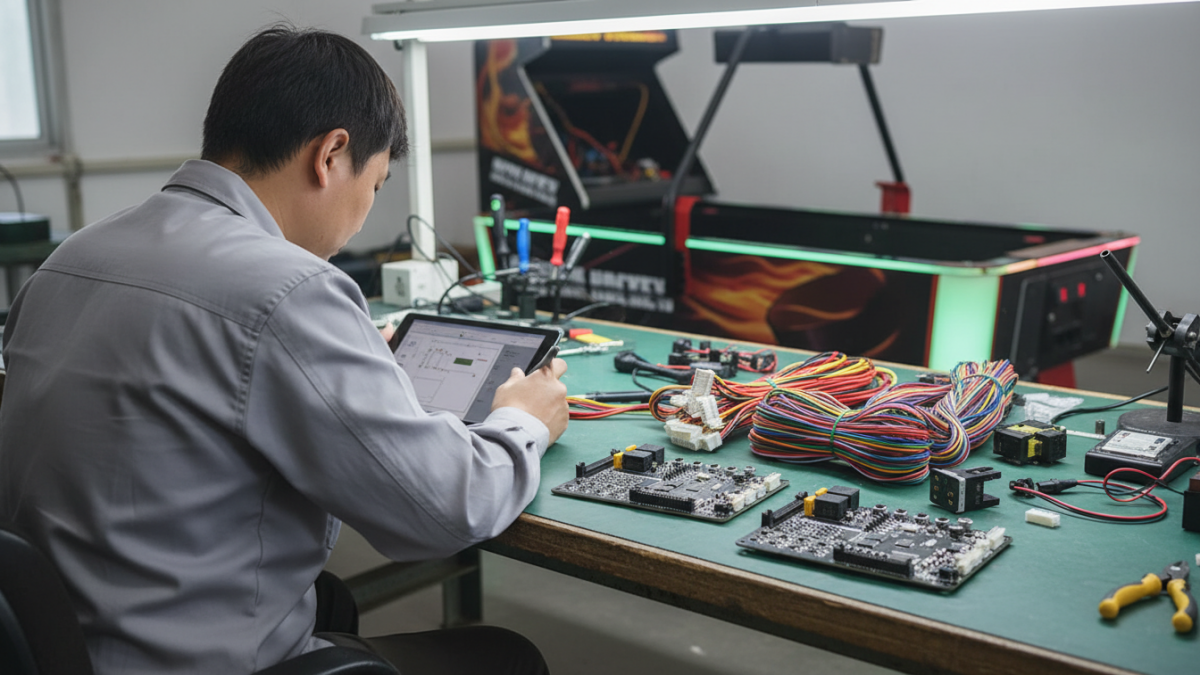
For arcade operators, distributors, and repair purchasing teams, replacing an arcade PCB board is not just a parts order. It decides whether the machine can start, read controls, accept payment, and keep earning after repair.
In real arcade maintenance, the wrong PCB may still power on, but the game screen, buttons, joystick signals, player positions, or coin system may not work correctly. That is why buyers should not choose a board only by photo or price.
A suitable replacement board should match the machine system, software version, wiring interface, payment method, and future maintenance plan.
What an Arcade PCB Board Actually Controls
An arcade PCB board is the control board that helps the machine run its game system and communicate with other parts. Depending on the machine, it may handle game software, screen output, sound, lighting, player controls, coin signals, card reader signals, or communication with an I/O board.
This is why PCB replacement is not a single-part decision. The board works together with monitors, buttons, joysticks, power supplies, wiring harnesses, payment devices, speakers, and control panels.
For fish game machines and other multi-player arcade cabinets, the setup is even more sensitive because player number, software settings, and payment systems may be different from one market to another.
Main Board and I/O Board Are Different
Many buyers say “PCB board” when they actually mean the main board, I/O board, or a complete board kit. These parts are related, but they do not do the same job.
The main board usually controls the game program, software version, image output, sound, and main game logic. The I/O board handles input and output signals, such as buttons, joysticks, coin signals, lights, and communication between the cabinet and the main board.
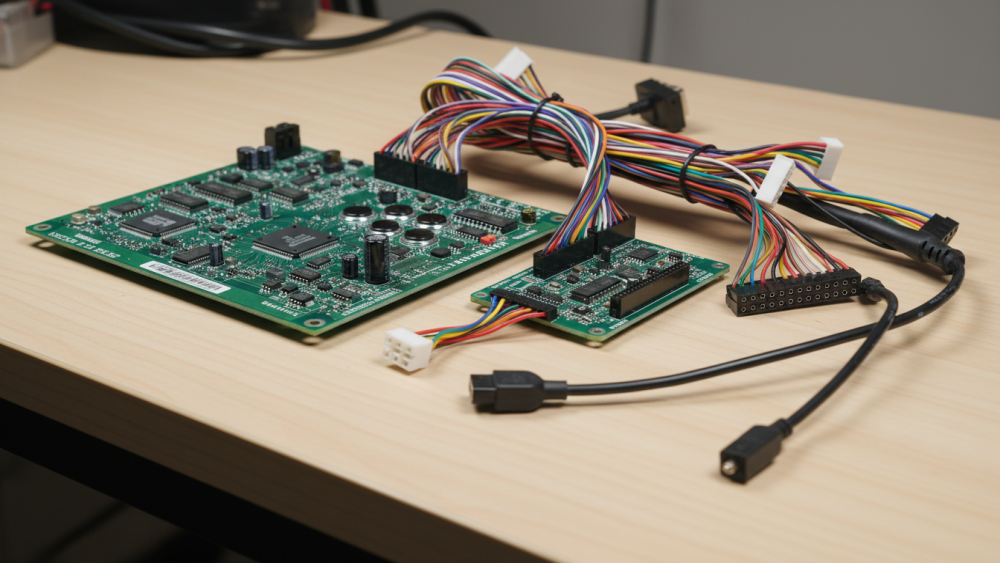
Before ordering, buyers should first confirm which part has failed. A main board will not always fix a joystick or coin signal issue. An I/O board will not solve a wrong software version.
What Buyers Should Confirm Before Replacement
A clear photo of the old board helps, but it is not enough. The supplier also needs to know how the board is used inside the machine.
Before buying an arcade PCB board, confirm the machine model, board model, software version, player number, screen output, wiring connector, voltage, payment method, and whether the cabinet has been modified before.
For repair purchasing teams, the best practice is to take photos of the board label, connector area, wiring harness, power connection, payment device, and full cabinet. These details help the supplier judge compatibility faster and reduce wrong orders.
If you are also checking buttons, joysticks, power supplies, wiring, or payment parts, our article about arcade machine parts for fish game machines explains the common replacement parts buyers should know.
Software, Player Number, and Payment Compatibility
For many arcade machines, software compatibility is as important as hardware compatibility. Two boards may look similar, but they may run different game versions, languages, difficulty levels, or payment logic.
This matters more for 4-player, 6-player, or 8-player cabinets. The player position, control layout, wiring, and software setting must match the actual cabinet.
Payment compatibility also needs careful checking. A board may run the game but fail to read coin acceptors, bill acceptors, card readers, or credit pulse signals. For a venue owner, this is a serious issue because the machine cannot earn if the payment system does not work.
Industry Insight
The biggest risk in arcade PCB replacement is not always the board price. It is system mismatch and future supply.
The Global Electronics Association reported in its April 2026 Global Sentiment Report that material cost pressures in electronics manufacturing reached the highest level since 2022. For arcade buyers, this means stable supply and confirmed compatible versions are becoming more important than buying the cheapest board once.
A distributor may save a small amount on one PCB order, but lose much more if the same board cannot be supplied again later. A game room owner may also lose income if one machine stays down while technicians search for the right software version, wiring harness, or payment setting.
A better approach is to keep a simple replacement record for each machine: board model, software version, player number, wiring photos, payment setting, supplier contact, and testing video. This makes future repair faster and reduces after-sales pressure.
When a Full PCB Kit Is Safer
Sometimes replacing one board is enough. But when the old cabinet has been modified, the wiring is unclear, or the original board version is no longer stable, a full PCB kit is often safer.
A full kit may include the main board, I/O board, wiring harness, power-related accessories, and payment connection parts. Since these parts are matched together, installation is usually easier and the risk of connector mismatch is lower.
For distributors, a full kit also makes after-sales support easier. Instead of solving one missing connector after another, the buyer can install a tested set that is prepared for the machine system.
For buyers who want to understand how machines are assembled and checked before delivery, our article about fish game machine factory production and quality checks explains the production and testing process in more detail.
Testing Before Shipment
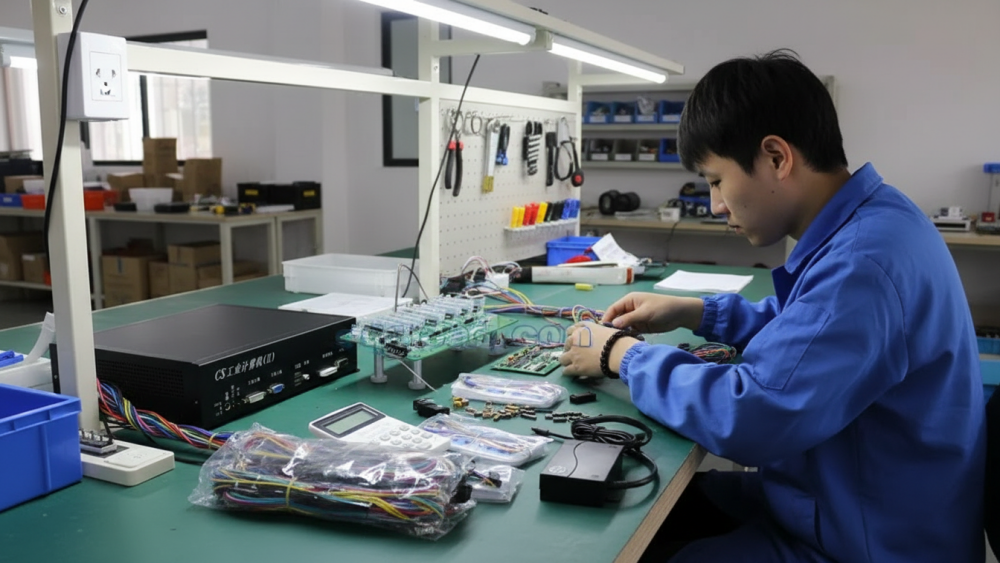
PCB quality is not only about whether the board can power on. A reliable supplier should check software version, connectors, control response, sound, screen output, payment signals, and player position settings before shipment.
IPC-A-610 provides requirements for the acceptance of electronic assemblies and is often used as a reference for electronic assembly quality. Buyers can review the IPC-A-610 information to better understand why electronic assembly inspection matters.
For arcade use, the most practical request is simple: ask the supplier for photos or videos showing the actual board running with the correct game screen, player controls, and payment method before shipment.
Questions to Ask Before Ordering
- Is this board compatible with my machine model?
- Is it the main board, I/O board, or a full PCB kit?
- What software version, language, and difficulty settings are included?
- Does it support my player number and control layout?
- Can it work with my coin acceptor, bill acceptor, or card reader?
- Can you provide testing photos or videos before shipment?
- Can the same board or compatible replacement be supplied again in the future?
Final Thoughts
An arcade PCB board may look like a small electronic part, but it decides whether the machine can run, accept payment, and return to service quickly after repair.
Before replacing a PCB board, buyers should confirm the board model, software version, wiring interface, payment system, player number, testing result, and long-term supply. The cheapest board is not always the safest choice if it creates more repair work later.
At Fusen Electronics, we supply arcade PCB boards, fish game PCB boards, I/O boards, wiring, and game software for commercial arcade machines. We also support multi-player configuration, difficulty adjustment, language customization, payment system integration, testing videos, and after-sales technical support for buyers who need stable long-term replacement solutions.
Need Factory Direct Fish Game Solutions?
Contact FUSEN for fish game machines, PCB kits, cabinets, OEM/ODM customization, and long-term technical support.
Get Factory Quote