
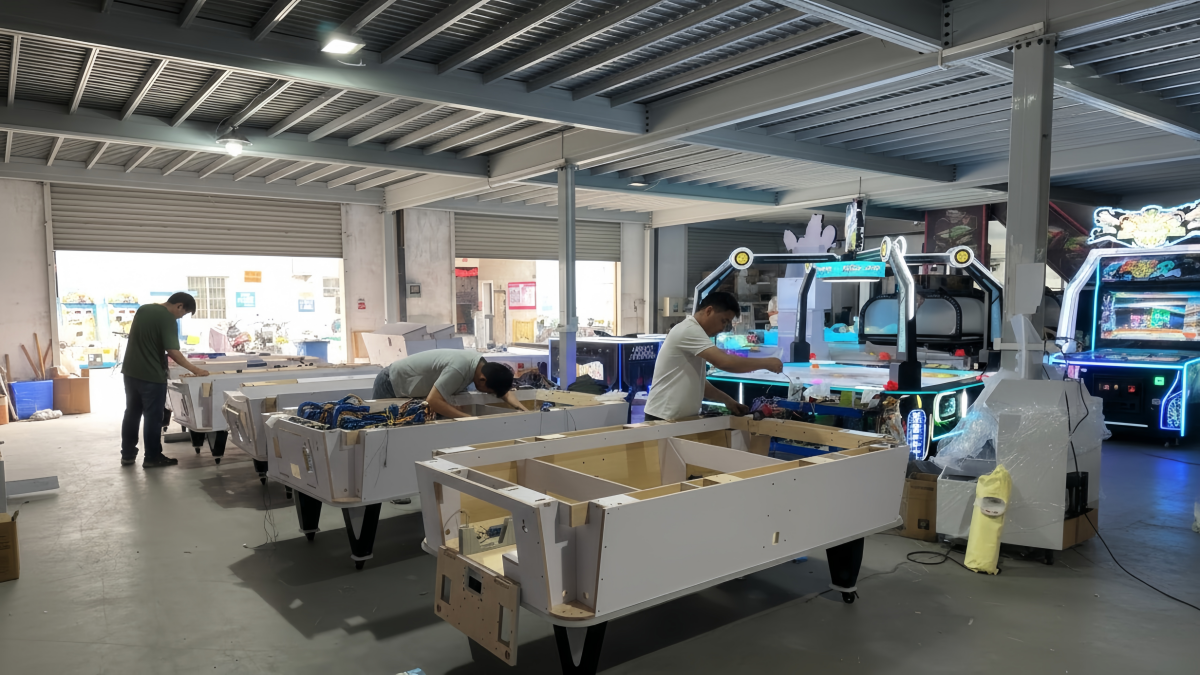
A fish game machine factory should do more than assemble the cabinet and confirm that the machine powers on. Before shipment, the cabinet, PCB, controls, payment system, wiring and power components should work correctly as one complete system.
A machine can look perfect in photos and still have a dead player position, loose connector, unstable display or payment problem. These are the issues proper factory testing should catch before international shipping makes them expensive to correct.
Check the Cabinet Before Power-On
Testing starts with the cabinet. Check the metal structure, control-panel alignment, locks, ventilation, internal clearance and service access before focusing on the electronics.
Technicians should be able to reach the PCB, power supply, screen wiring and player controls without dismantling large sections of the machine. Poor internal layout may not affect the first day of operation, but it can make future repairs much harder.
A complete machine such as our 6 Player Fish Hunter Arcade Cabinet combines multiple player positions, controls, display, payment hardware and internal electronics, so these parts need to be checked together.

Test the PCB and Every Player Position
A power-on test alone is not enough for a multi-player fish table. The factory should test PCB startup, screen output, software settings, sound, I/O connections, buttons, joysticks and every player position individually.
This is particularly important when one board can support different cabinet configurations. Our Stallone Fish Game PCB Kit, for example, includes the main PCB, keypad, power supply and connection cables. Testing the complete system is more useful than checking the main board alone.
Do Not Ignore Power, Wiring and Payment
Not every machine fault comes from the PCB. Loose terminals, unstable power, incorrect wiring or an untested payment signal can produce problems that initially look like software failures.
Before shipment, check the voltage configuration, power supply, connectors, wiring harnesses and cable routing. Coin acceptors, bill acceptors or card-reader interfaces should also be tested using the configuration ordered by the buyer.
IEC 60335-2-82:2024 covers safety requirements for electric commercial amusement machines, including gaming machines and video games. It is a useful reference when considering electrical safety during amusement machine testing. Applicable requirements still depend on the product and destination market.
Seven Checks Before Shipping
| Check | What to Verify |
|---|---|
| Cabinet | Structure, panels and service access |
| Display | Stable image and normal sound |
| PCB | Startup, software and I/O |
| Controls | Every button, joystick and player position |
| Power | Voltage, connectors and wiring |
| Payment | Coin, bill or card-reader signal |
| Final Run | Complete machine operating together |
Run the Complete Machine Before Packing
After individual checks, the complete machine should be run again. Watch for restarting, freezing, screen flicker, abnormal sound, an unresponsive player position or payment-recognition problems.
For overseas orders, buyers should also ask for a pre-shipment testing video showing the actual machine in operation. After testing, the screen, control panel, cabinet corners and internal components should be protected for transport.

Industry Insight: Ask to See Your Machine Being Tested
For an overseas buyer, a generic factory video proves very little. A more useful request is simple: show the actual machine ordered being tested before shipment.
The video should show the screen, player positions, controls and basic operation. For customized machines, it should also confirm that the agreed PCB, payment method and other important configurations have actually been installed.
Final Thoughts
When comparing a fish game machine factory, do not judge only by product photos or quotation price. Ask how the machine is assembled, what is tested and what evidence is provided before shipment.
Fusen supports PCB and software configuration, player controls, payment integration, pre-shipment testing videos, spare-parts supply and long-term technical support. The purpose of factory testing is simple: find avoidable problems before the machine leaves the workshop.
Need Factory Direct Fish Game Solutions?
Contact FUSEN for fish game machines, PCB kits, cabinets, OEM/ODM customization, and long-term technical support.
Get Factory Quote