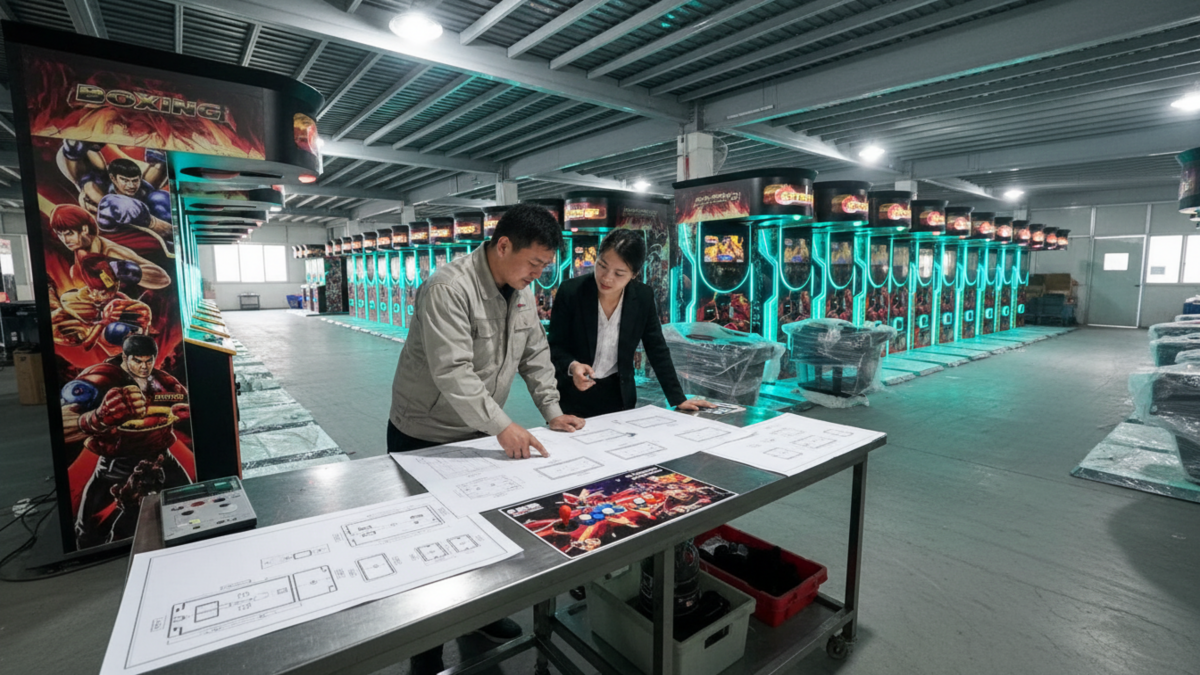
OEM arcade machine customization is not only about changing a logo or choosing another cabinet color. In real orders, many problems start before production: unclear artwork files, wrong payment openings, unconfirmed software settings, or a cabinet layout that looks good but is hard to repair later.
For arcade operators, distributors, and repair purchasing teams, the real question is simple: will this custom arcade machine be easy to install, operate, maintain, and resell? If this is not clear before production, a cheap quotation can become expensive after delivery.
Grand View Research estimates the global arcade game machines market at USD 11.0 billion in 2025, with growth projected through 2033. More demand also means more machine styles and more OEM options, so buyers should confirm key details before cutting, printing, wiring, and assembly. You can refer to this arcade game machines market report for broader market data.
Quick Answer: What Should Buyers Confirm First?
Before production starts, buyers should confirm cabinet structure, artwork files, software settings, payment system, wiring, testing, packaging, and spare parts. These details decide whether the finished machine is truly ready for commercial use.
| Custom detail | Why it matters |
| Cabinet structure | Affects floor space, repair access, ventilation, and shipping volume. |
| Artwork and logo | Poor files can delay printing or make the cabinet look unprofessional. |
| Software setting | Language, difficulty, boot screen, and player count must match the market. |
| Payment system | Coin, bill, card reader, or ticket output may need different openings and wiring. |
Start with the Venue, Not the Product Photo
A product photo can show the machine style, but it cannot show whether the machine fits the buyer’s venue. A shopping mall game room, family entertainment center, distributor showroom, and high-traffic arcade may need different cabinet sizes, screen layouts, payment systems, and spare parts plans.
Before asking for the best price, buyers should tell the factory where the machine will be used, how many units they need, which country the machines will ship to, and whether the order is for operation, resale, or OEM branding.
For example, a Cartoon Hall Boxing Arcade Machine has different cabinet, safety, and payment requirements from a fish table or air hockey game. The machine type should be confirmed before discussing deep customization.
Confirm Cabinet and Artwork Before Production
The cabinet decides floor space, player comfort, heat dissipation, wiring space, door position, lock type, and future maintenance speed. If a technician cannot easily reach the PCB, power supply, coin acceptor, or card reader, every small repair becomes slower.
Logo and sticker files should also be prepared properly. A low-quality screenshot may look acceptable in chat, but it often prints poorly on a real cabinet. Buyers should provide high-resolution logo files, cabinet artwork, brand colors, and clear placement requirements.
Treat Software and Payment as One System
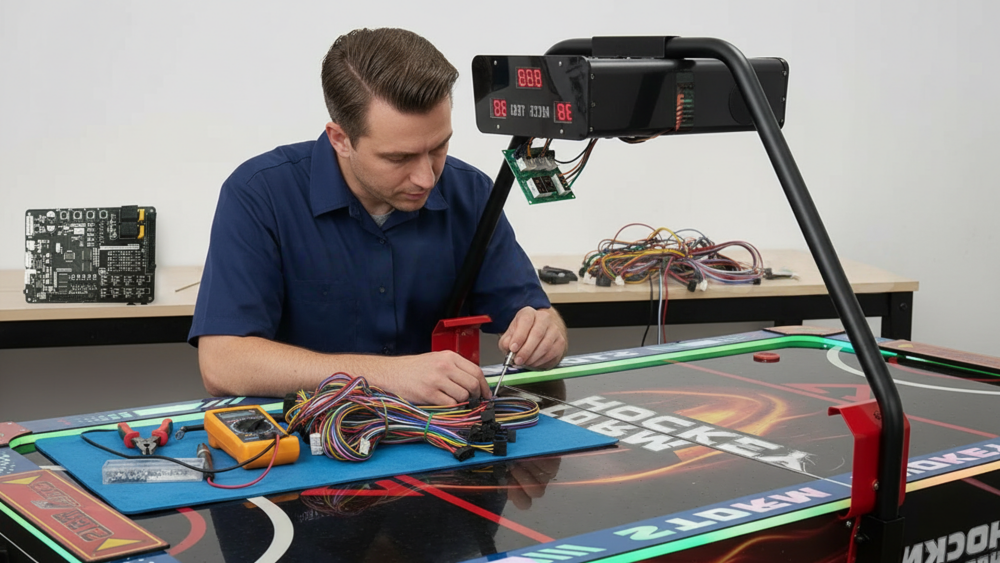
For commercial arcade machines, software settings are not small details. Game version, language, boot screen, difficulty level, player count, sound setting, payment signal, and button mapping should be checked before production.
Payment configuration should not be left until the end. Coin acceptors, bill acceptors, card readers, and ticket dispensers may require different cabinet openings, wiring harnesses, power connections, and software signals. If the payment method changes after the cabinet is finished, modification becomes slower and more expensive.
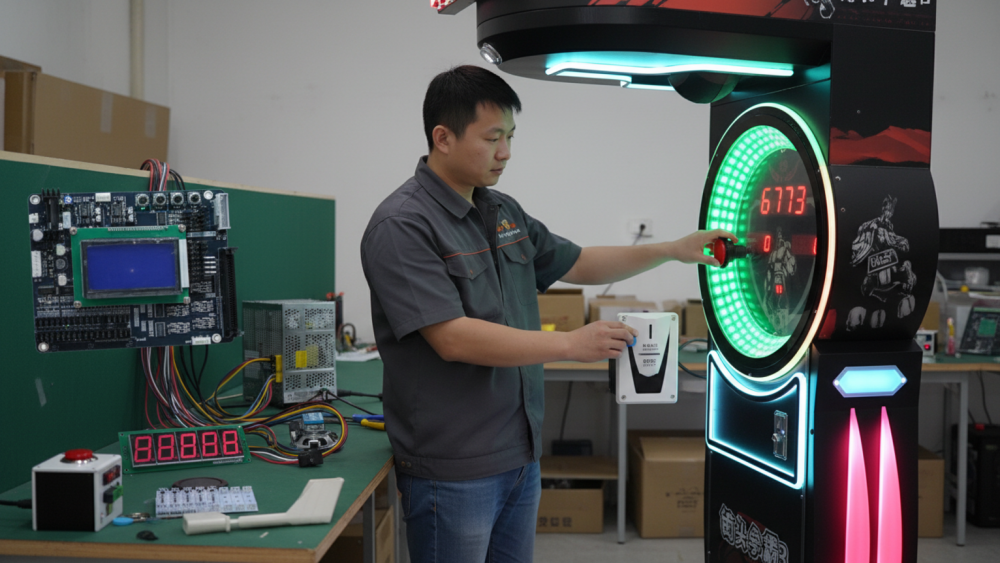
For family entertainment machines such as the Parent-Child Air Hockey Arcade Machine, payment access, cabinet size, player position, and packing volume should be checked together before production.
Quality Control Is Also Customization
OEM customization is not finished when the design is approved. The factory still needs to repeat the same result across the full order. ISO 9001 focuses on quality management, meeting customer and applicable requirements, and improving customer satisfaction. For arcade machine buyers, the practical point is clear: customization should follow confirmed drawings, inspection steps, testing records, and clear communication. You can refer to the official ISO 9001 quality management standard.
Before shipment, buyers should ask for photos or videos of power-on testing, screen display, button response, payment testing, sound, lighting, and packing condition. For overseas orders, one missed detail can become expensive after arrival.
Do Not Forget Packing, Shipping, and Spare Parts
Good OEM planning includes packing method, carton marks, labels, manuals, spare keys, spare buttons, wiring accessories, power supplies, locks, and payment parts. These details are especially important for distributors, because local customers usually expect fast support after delivery.
Shipping cost is also not fixed. The Freightos Baltic Index tracks container pricing across major global shipping lanes, which reminds buyers that cabinet size, packing volume, and shipment timing can all affect landed cost. You can check the Freightos Baltic Index for freight market reference.
Industry Insight
In real OEM arcade machine projects, the biggest risk is often not the price. It is unclear confirmation before production.
A cheaper machine does not help much if the cabinet cannot fit the venue, the artwork needs reprinting, the payment system cannot be installed cleanly, or the software setting must be changed after shipment. Experienced buyers treat OEM customization as a project, not a simple product order.
Final Thoughts
OEM arcade machine customization should make the machine easier to sell, install, operate, and maintain. Buyers should confirm cabinet structure, artwork, software, payment, testing, packing, shipping, and spare parts before production begins.
Good customization is not about adding more features. It is about making the right details clear early, so the finished machine works properly in the buyer’s venue and target market.
Need Factory Direct Fish Game Solutions?
Contact FUSEN for fish game machines, PCB kits, cabinets, OEM/ODM customization, and long-term technical support.
Get Factory Quote