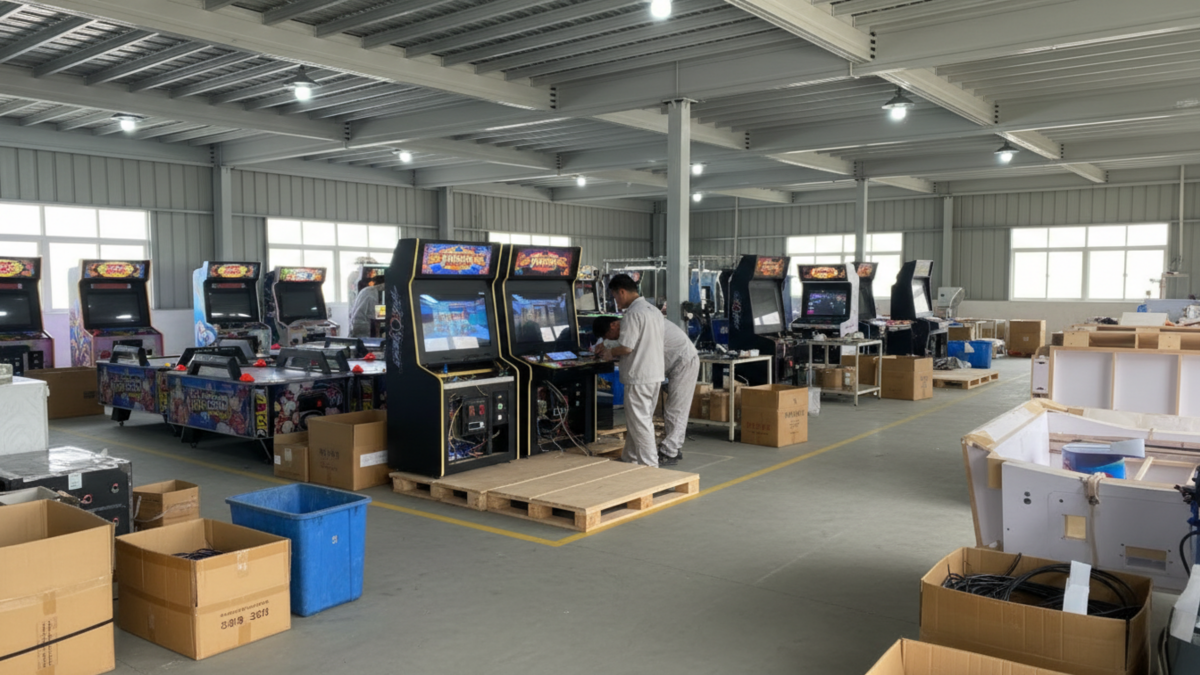
For game room owners, distributors, and wholesale buyers, ordering OEM arcade machines is not just about adding a logo or changing the cabinet color. A custom machine has to fit the venue, target players, payment system, local market, and future maintenance plan.
Many problems in OEM projects do not come from production itself. They come from details that were not confirmed clearly before production started. A wrong plug, unsuitable payment interface, unclear artwork file, or small cabinet size mistake can delay installation and create extra after-sales work.
Before placing an OEM order, buyers should confirm the key details with the factory step by step.
What OEM Means for Arcade Machines
OEM arcade machines are produced according to the buyer’s brand, design, configuration, or market requirements. In real projects, this can include cabinet color, logo, sticker artwork, boot screen, button layout, game software, main board configuration, payment system, packaging, and user manual.
For distributors, OEM helps build a consistent product line. For game room owners, it helps machines match the venue style. For wholesale buyers, it can make the product easier to sell in a specific market.
Modern family entertainment centers and location-based entertainment venues usually combine different attractions and machines. IAAPA’s Family Entertainment Centers resources show that these venues can include many types of entertainment experiences. This is why OEM arcade machines should be planned around real operation, not only appearance.
Confirm the Machine Type and Market First
Before discussing design, buyers should first confirm what type of machine they need and where it will be used. A machine for a shopping mall game room may need a clean cabinet, simple payment setup, and stable daily operation. A distributor may care more about batch consistency, spare parts, and repeat supply.
Important details include machine type, player number, screen size, cabinet size, voltage, plug type, language, payment method, and destination market.
This step sounds basic, but it prevents many later problems. Different markets may use different plugs, coins, tokens, card systems, language settings, and packaging requirements.
Cabinet Design, Logo, and Artwork
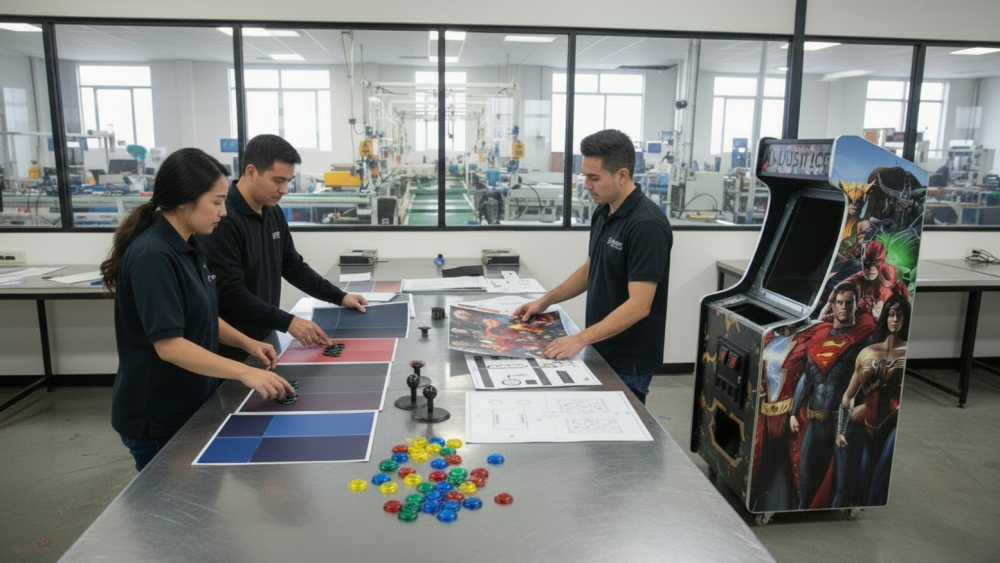
The cabinet is the first thing players see, so the design should look professional and match the buyer’s brand or venue style. Common OEM items include cabinet color, logo position, sticker artwork, control panel design, and sometimes lighting style.
Before printing or production, artwork files should be checked carefully. The buyer and factory should confirm size, resolution, color direction, logo placement, and whether the design fits the real cabinet structure.
For wholesale projects, consistency matters. If the first batch and repeat order look different, it may affect brand image and customer confidence.
Hardware Configuration and Button Layout
OEM production should also confirm the internal configuration, not only the outside design. This includes screen type, main board, I/O board, power supply, buttons, joysticks, speakers, lighting, wiring harness, coin acceptor, card reader, and cabinet parts.
Button layout should match the game type and player habits. Some machines need more space for children or group players. Others need faster response and a more comfortable control position.
Buyers should also ask whether common parts are easy to replace later. For commercial venues, maintenance convenience is just as important as the first installation.
Software, Boot Screen, and Payment System
Software customization should be confirmed before production starts. This may include boot screen, game language, menu settings, difficulty level, scoring rules, sound, and display interface.
Payment settings need special attention. Buyers should confirm whether the machine will use coins, tokens, bill acceptors, card readers, or another venue management system. Voltage, signal type, wiring connector, and installation space should match the final machine.
For distributors selling to different markets, one payment setup may not fit every customer. Confirming this early can reduce installation problems after shipment.
Sample Confirmation Before Batch Production
For custom arcade machines, sample confirmation is one of the most important steps. Buyers should review photos, videos, artwork placement, machine size, control layout, payment function, screen display, and software settings before approving batch production.
A sample is not only for appearance. It is the best time to find problems in structure, wiring, payment compatibility, and operation. Once mass production starts, changes become slower and more expensive.
For buyers who want to understand how commercial amusement machines are assembled and tested before shipment, our article on amusement machine factory production and quality checks explains the process in more detail.
Testing, Packing, and Spare Parts Support
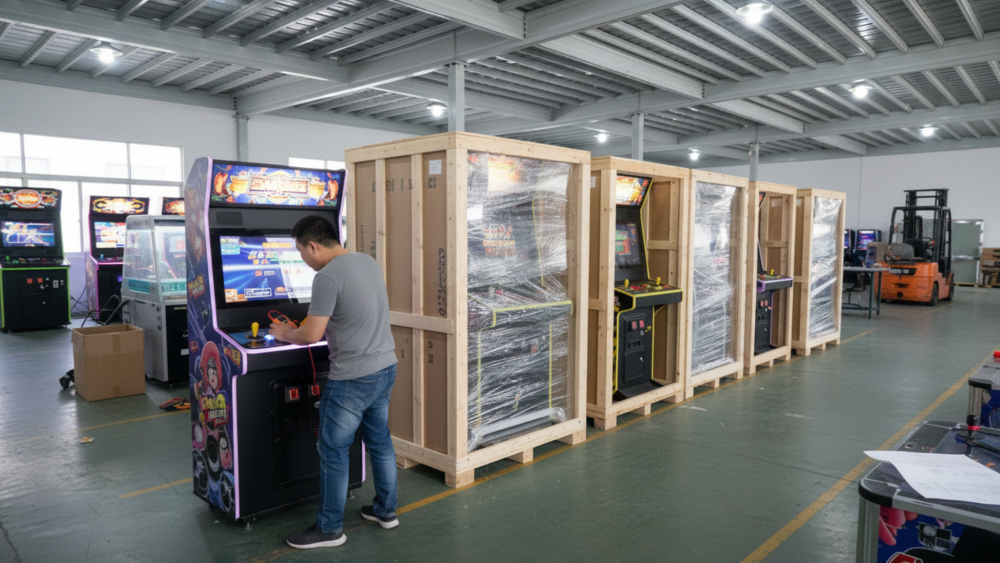
Before shipment, the factory should test the machine under normal working conditions. This includes screen display, button response, joystick operation, payment function, software stability, power supply, lighting, sound, wiring, and full machine running.
For the wider amusement equipment industry, ASTM Committee F24 shows how important testing, maintenance, inspection, and quality assurance are for amusement rides and devices. ASTM’s official page states that Committee F24 was formed in 1978, has current membership of 983, and has jurisdiction over 29 standards. Buyers can review the ASTM Committee F24 information for a broader standards perspective.
Packing should also be confirmed before shipment. For export orders, the factory should protect the screen, control panel, cabinet corners, and movable parts. Buyers can ask for testing videos, packing photos, and loading photos before delivery.
Spare parts support should not be ignored. Buttons, joysticks, power supplies, wiring harnesses, boards, screens, payment parts, and cabinet parts may be needed later. For operators and distributors, easy access to spare parts helps reduce downtime.
Questions to Ask Before OEM Production
- Which parts of the machine can be customized?
- Can you support logo, cabinet color, artwork, and boot screen customization?
- Can the payment system match my local market?
- Can I confirm a sample before batch production?
- How do you test the machine before shipment?
- Can you provide testing videos and packing photos?
- Can you supply spare parts for future maintenance?
Final Thoughts
OEM arcade machines can help buyers build a clearer product identity and match local market needs. But custom production only works well when the important details are confirmed early.
Before placing an OEM order, buyers should confirm machine type, cabinet design, artwork, hardware configuration, software settings, payment system, testing process, packing method, and spare parts support.
For game room owners, this means smoother installation. For distributors and wholesale buyers, it means fewer complaints and better repeat business. In OEM arcade machine production, clear confirmation before production is often what protects the whole order.
Need Factory Direct Fish Game Solutions?
Contact FUSEN for fish game machines, PCB kits, cabinets, OEM/ODM customization, and long-term technical support.
Get Factory Quote