
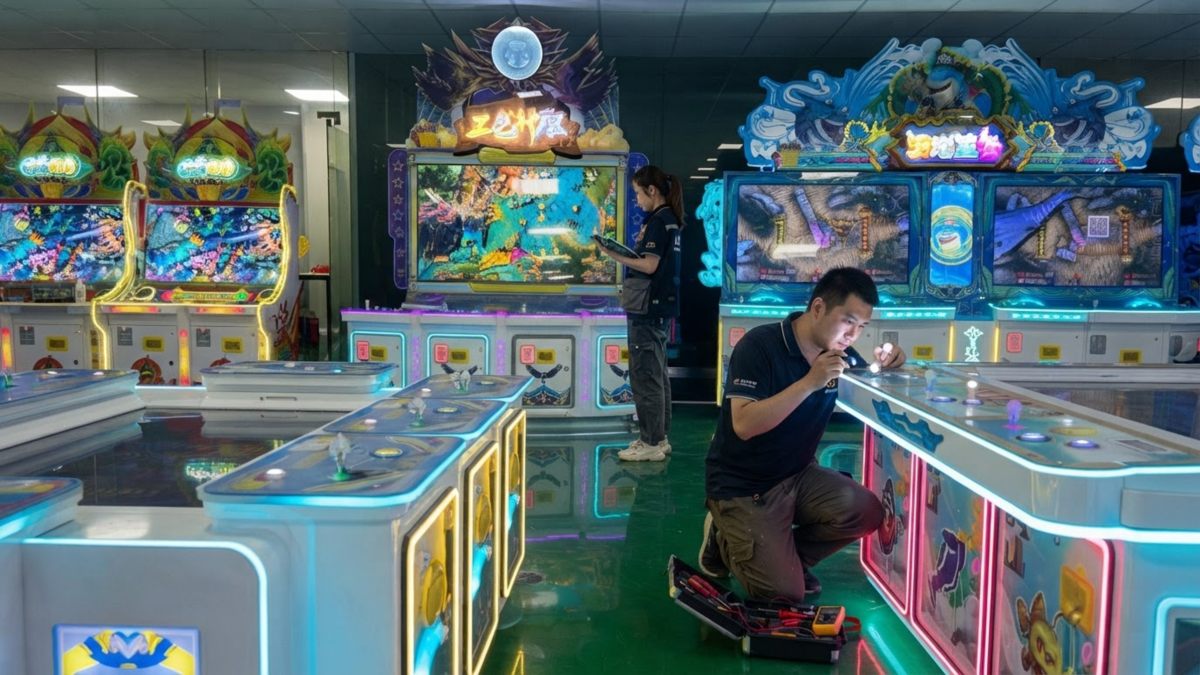
For arcade operators and distributors, choosing a fish game machine is not only about how many players it supports. Player configuration affects floor space, cabinet size, screen layout, PCB matching, I/O board support, payment setup, wiring, and future maintenance.
A 4-player, 6-player, 8-player, or 10-player fish table game may look similar in photos, but the real operating details are different. The right choice should match the venue, customer flow, service plan, and spare parts supply.
Why Player Configuration Matters
Player count should be decided by the venue, not by cabinet size alone. A small game room may need a compact cabinet that is easy to place and watch. A larger arcade may prefer a multiplayer fish game machine that can bring several players around one screen.
IAAPA’s Entertainment Center Benchmark Report looks at attraction offerings, guest behavior, revenue generation, and expense management. You can refer to the IAAPA page on entertainment center benchmarks. For buyers, the practical point is simple: a machine should support the whole venue operation, not only fill an empty space.
4-Player Cabinets for Smaller Venues
A 4-player fish game machine is easier to place in compact arcades, bars, small game rooms, and entertainment corners. It takes less space, is easier for staff to manage, and is often a practical starting point for new operators.
Before ordering, buyers should check the screen size, cabinet height, control panel spacing, payment position, access door, and internal repair space. A small cabinet is useful only when it is still easy to service.
For repair buyers, the key is matching. The PCB, I/O board, wiring harness, buttons, joysticks, and payment signal should match the original machine. A similar-looking cabinet does not always use the same internal layout.
6-Player and 8-Player Cabinets for Commercial Arcades
For many game rooms, 6-player and 8-player fish game cabinets are more common. They create stronger table activity, attract more attention, and allow several players to join at the same time.
But larger cabinets need better planning. Buyers should confirm walking space, player distance, screen visibility, control panel comfort, power supply, cooling space, and payment access. If the machine is crowded or hard to open, daily operation becomes slower.
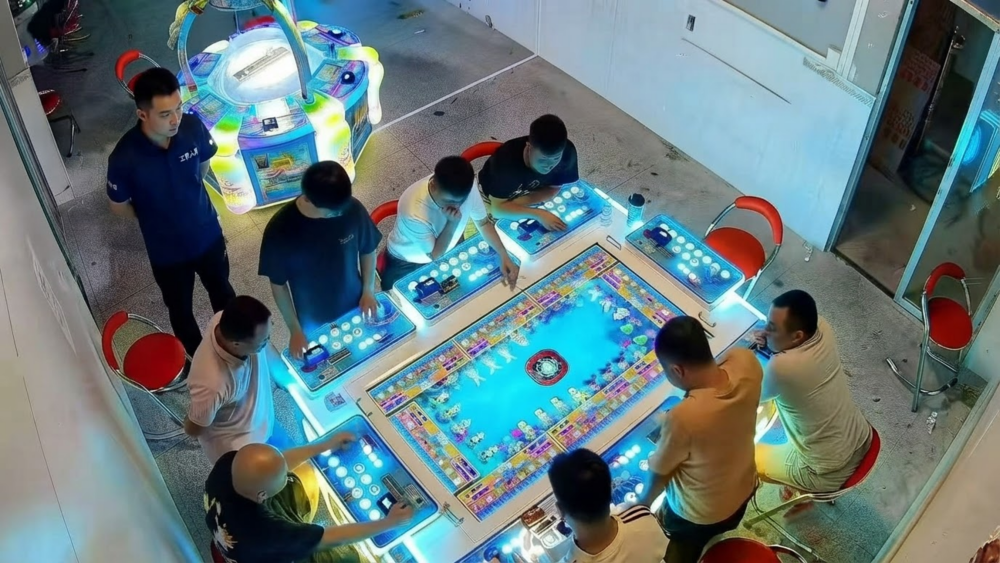
For distributors, larger models also require stable spare parts supply. Buttons, joysticks, screens, I/O boards, power supplies, wiring, payment parts, and control panels should be easy to reorder later.
PCB, I/O Board, and Wiring Must Match
Player configuration is not only a cabinet decision. The PCB, software setting, I/O board, wiring harness, and player controls must all match the number of positions.
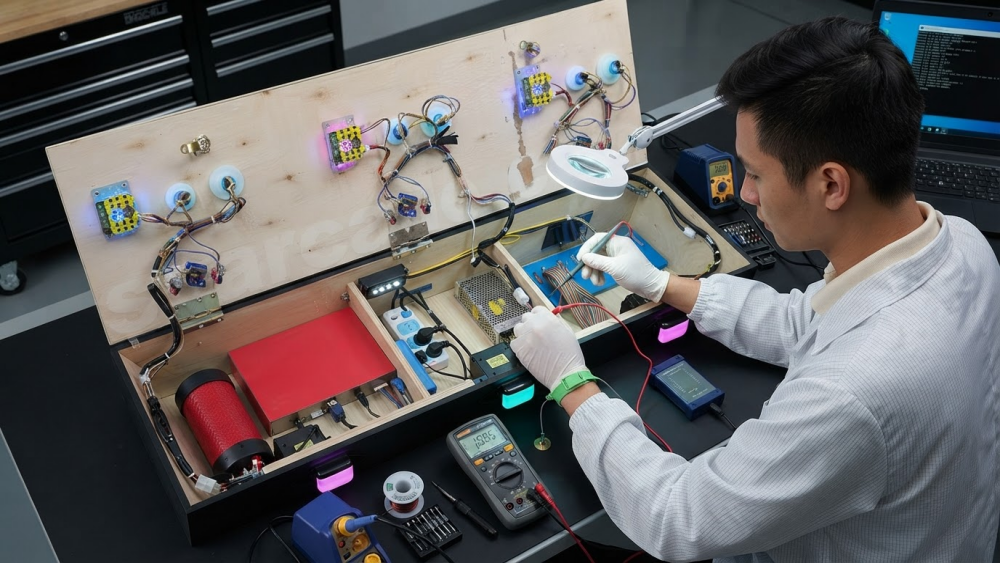
If the configuration is wrong, one player position may not respond, credits may count incorrectly, or button signals may go to the wrong function. These problems often appear when buyers replace a board without checking the whole system.
For related repair logic, our fish game PCB troubleshooting guide explains how PCB, I/O signals, wiring, and software settings affect machine operation.
Payment Setup Should Fit the Cabinet
Fish game machines may use coin acceptors, card readers, bill acceptors, or mixed payment systems. The payment parts should match the PCB, I/O board, cabinet space, wiring route, and credit setting.
Payment habits are changing in many markets. The Federal Reserve’s 2025 Diary of Consumer Payment Choice reported that in 2024, cash accounted for 14% of U.S. consumer payments by number, while credit cards accounted for 35% and debit cards for 30%. You can review the Federal Reserve’s 2025 payment diary.
This does not mean coin systems are no longer useful. It means buyers should choose payment settings based on local player habits, staff management, and machine configuration.
For payment matching details, our arcade card reader and coin acceptor guide explains why payment parts, wiring, I/O boards, and software settings should be checked together.
What Distributors Should Confirm
Before bulk orders, distributors should confirm cabinet size, player count, screen size, PCB model, I/O board type, wiring layout, payment method, voltage, packed size, spare parts list, and test video.
Batch consistency matters. ISO 9001 describes the ability to consistently provide products and services that meet customer and applicable regulatory requirements. You can refer to ISO’s page on ISO 9001 quality management systems.
For distributors, the real question is whether the same cabinet, board, wiring, and spare parts can be supplied again later. Stable configuration makes after-sales support much easier.
Industry Insight
For venue owners, the best fish game machine is not always the biggest one. It is the one that fits the floor plan, keeps players comfortable, and can be serviced quickly when parts need replacement.
For distributors and repair buyers, player configuration should be judged by repeatability and parts matching. Experienced buyers do not only ask whether the machine is 4-player, 6-player, or 8-player. They ask whether the PCB, I/O board, software, payment system, wiring, and spare parts can be supported over time.
Final Thoughts
Choosing a fish game machine player configuration should be treated as a commercial equipment decision. Buyers should check venue space, player count, cabinet structure, PCB, I/O board, wiring, payment system, software setting, and spare parts supply before ordering.
A good fish game cabinet should not only look attractive on the floor. It should fit the venue, run smoothly, and remain easy to support after delivery.
Need Factory Direct Fish Game Solutions?
Contact FUSEN for fish game machines, PCB kits, cabinets, OEM/ODM customization, and long-term technical support.
Get Factory Quote