
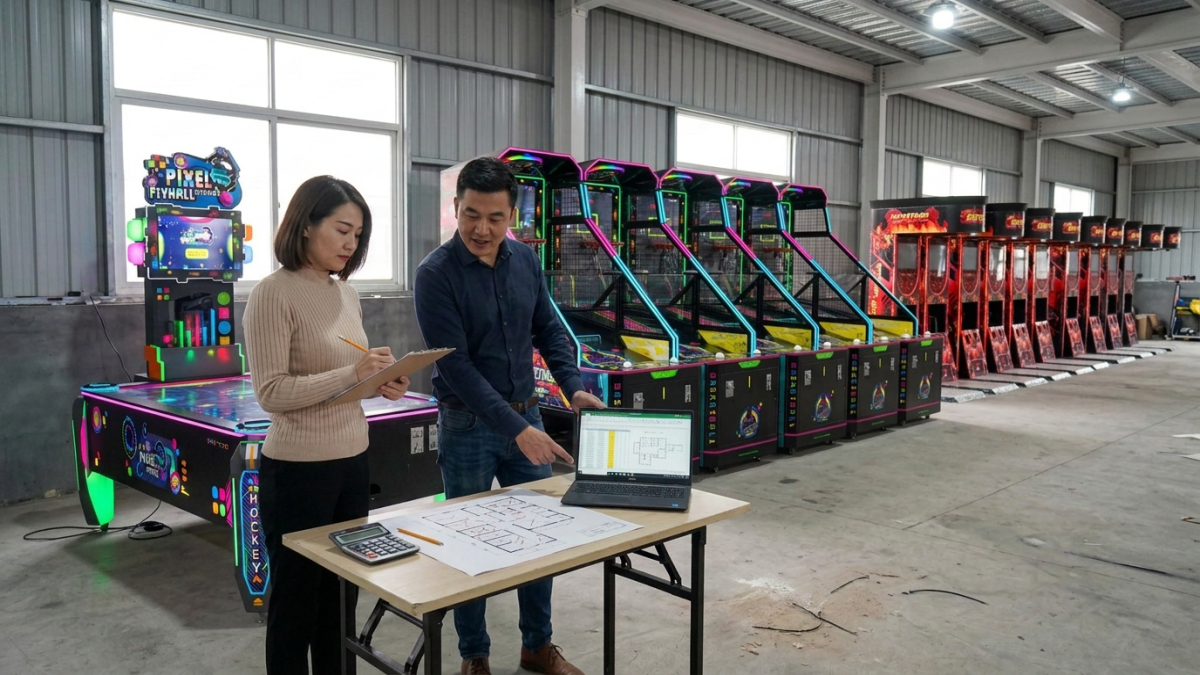
There is no single reliable answer to how much it costs to start a commercial arcade. A small mall game room, a family entertainment center and a distributor-operated showroom may buy similar machines, but their rent, construction, staffing and payment-system costs can be very different.
The mistake is usually not an incorrect machine price. It is treating the equipment quotation as the complete project budget. Freight, electrical work, installation, card readers, spare parts and opening cash often appear only after too much of the capital has already been committed.
For venue owners and project buyers, the useful calculation is simple: what will it cost to prepare the site, deliver and commission the equipment, open the doors and keep the business operating while customer traffic develops?
Define the Arcade Before Estimating the Cost
A startup figure has little meaning until the project scope is clear. Begin with the usable floor area, target customer group, machine quantity, payment model and destination market.
A children’s game room may need more compact machines and open circulation space. A fish game venue may invest more heavily in multiplayer equipment, seating, screen size and technical support. A mixed family venue may need basketball, air hockey, simulators, kids machines and group-play equipment rather than many cabinets serving the same customer.
The first equipment list should therefore be based on machine roles, not simply the maximum number of cabinets that fit the room. Our commercial arcade machine buying guide explains how to balance customer groups, floor space and maintenance needs.
Separate Opening Costs From Monthly Expenses
A practical budget should keep one-time startup costs separate from recurring operating expenses. The U.S. Small Business Administration recommends organizing expenses this way and calculating at least one year of monthly costs in the financial plan.
Typical opening costs include:
- Lease deposit, permits and basic venue preparation.
- Arcade machines, customization and factory accessories.
- Freight, insurance, customs clearance and local delivery.
- Electrical work, networking and payment-system installation.
- Initial spare parts, tools, staff training and opening marketing.
Monthly costs normally include rent, salaries, utilities, payment fees, insurance, maintenance and ongoing marketing. A project can look affordable on opening day and still be difficult to sustain if these expenses were not tested against realistic revenue.
Calculate the Delivered and Installed Equipment Cost
Commercial buyers should compare the cost of putting each machine into service—not only the factory price.
The quotation should identify the cabinet, screen, game system, voltage, payment interface, accessories, packaging and included spare parts. It should also state whether software adjustment, card-reader installation, testing and technical documents are included.
For imported equipment, ask for packed dimensions, gross weight, package quantity and loading method. DHL Global Forwarding explains that carriers compare actual weight with volumetric weight and charge against the higher figure. Large cabinets can therefore be expensive to ship because of the space occupied by the machine and its protective packaging.
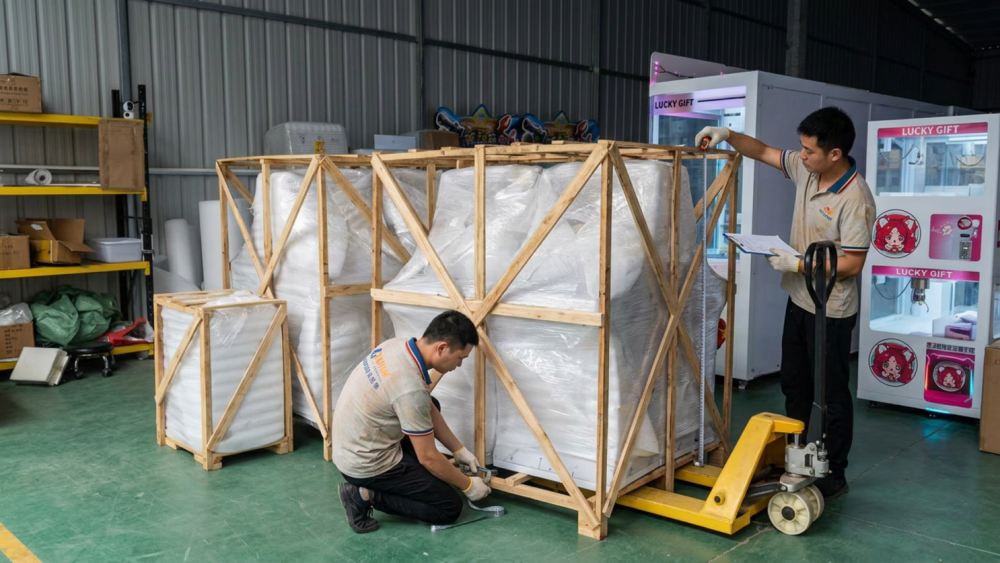
Local delivery may also require unloading labour, lifting equipment, temporary storage or partial cabinet disassembly. These costs belong in the equipment budget even when they do not appear on the supplier’s invoice.
Confirm the Site Before Approving the Machine Order
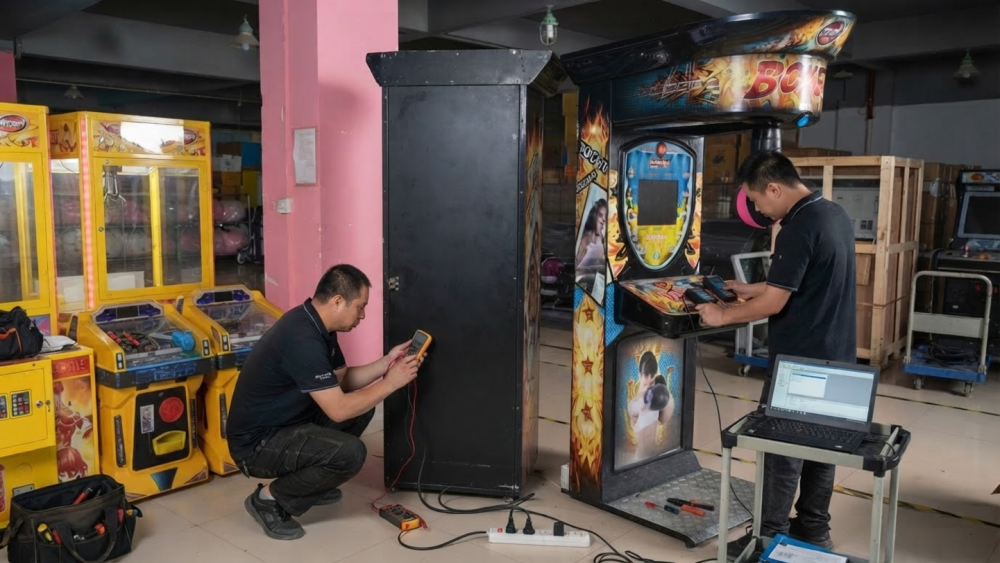
The venue should be checked before the final machine list is approved. Entrance width, electrical capacity, ventilation, network access, emergency routes and rear service clearance can all change the project cost.
A machine that needs an electrical upgrade, a new card-reader bracket or local wiring modification is no longer being purchased at the price shown in the original quotation.
The same applies to floor planning. Filling every available area may increase the machine count, but it can leave insufficient room for customers, stools and maintenance access. Our commercial game room setup guide covers the main access, electrical and pre-opening checks.
Protect Working Capital and Test the Break-Even Point
Do not spend the entire available budget before the venue opens. Early customer traffic may differ from the original forecast, and some machines may require repositioning, setting changes or additional spare parts.
A basic break-even check is more useful than relying on an industry-wide startup average. The SBA break-even method calculates required sales revenue by dividing fixed costs by the contribution margin.
For example, a venue with monthly fixed costs of $20,000 and a 60% contribution margin would need approximately $33,333 in monthly sales to break even. This is only a planning example. The actual margin must reflect the venue’s payment fees, prize costs, maintenance and other sales-related expenses.
SBA guidance also suggests adding roughly 10% to the analysis for miscellaneous expenses that cannot be predicted accurately. A contingency allowance is especially important for an imported-equipment project, where freight, customs and local installation costs can change before opening.
Industry Insight
The strongest arcade budgets leave room to adjust after opening.
Venue owners should avoid buying one additional machine at the expense of operating cash. Distributors should reduce unnecessary differences in boards, wiring, payment systems and software versions, because each variation creates another spare-parts and support requirement.
Repair purchasing teams should also be involved before the equipment order is finalized. Confirming common power supplies, buttons, readers and control parts early can reduce the number of different spares the venue must hold.
The lowest purchase quotation is not always the lowest project cost. Our article on arcade machine total cost of ownership explains why compatibility, downtime and future parts availability also belong in the buying decision.
Final Thoughts
The cost to start a commercial arcade includes the venue, delivered equipment, electrical and payment work, opening inventory and enough operating cash to support the first stage of the business.
Define the project first, compare complete quotations and test the expected revenue against the monthly cost structure. A realistic budget should not only get the doors open; it should leave the venue enough room to operate, learn and improve.
Need Factory Direct Fish Game Solutions?
Contact FUSEN for fish game machines, PCB kits, cabinets, OEM/ODM customization, and long-term technical support.
Get Factory Quote